Formaldehyde → Benzoxazines
Reaction equation

CO[C:3]1[CH:8]=[CH:7][C:6]([OH:9])=[CH:5][CH:4]=1.[NH2:10][CH2:11][CH2:12]CO.C=O.C(N(CC)CC)C.C(Cl)(=O)C=C>O.C1(C)C=CC=CC=1>[O:9]1[C:6]2[CH:5]=[CH:4][CH:3]=[CH:8][C:7]=2[CH:12]=[CH:11][NH:10]1Participants
8
Reactant 5


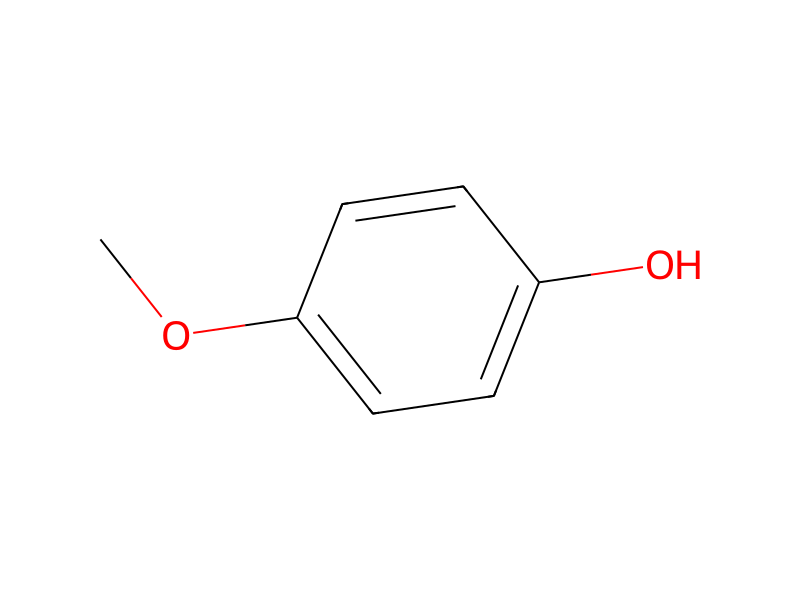


Product 1

Reagents, catalysts & solvents 2


Conditions
- Temperature
- 0 °C
Procedure
A 500 mL flask was charged with 4-methoxyphenol (12.4 g, 100 mmol), 3-amino-1-propanol (7.5 g, 100 mmol), and paraformaldehyde (6.4 g, 213 mmol). Toluene (200 g) was added to the flask and the mixture was heated to reflux for one hour, during which time 3.8 mL of water was collected in a Dean-Stark trap. The solution was cooled to 0° C., and triethylamine (23 g, 227 mmol) was added to the flask. This was followed by the drop-wise addition of acryloyl chloride (11 g, 125 mmol). The solution was allowed to stir overnight at room temperature. The product was worked up in a similar fashion as described in previous examples. About 20 g (72% yield) of a low viscosity, orange liquid was recovered.
Workup
- temperaturethe mixture was heated
- customwas collected in a Dean-Stark trap
- customAbout 20 g (72% yield) of a low viscosity, orange liquid was recovered
Sources & evidence
- ORD record
- ord-f92f6734f97c4b21b95d511b32027356
- Source dataset
- uspto-grants-2004_06
- Patent number
- US06743852B2
Reaction notes
Loading…