Phloroglucinol → Bisphenol P
Reaction equation

[C:1]1([CH:9]=[C:7]([OH:8])[CH:6]=[C:4](O)[CH:3]=1)O.CC(C1C=CC(O)=CC=1)([CH2:22][C:23]([CH3:32])([C:25]1[CH:30]=[CH:29][C:28]([OH:31])=[CH:27][CH:26]=1)[CH3:24])CC(C1C=CC(O)=CC=1)C.OC1[CH:46]=[CH:45][C:44]([C:47]2[CH:52]=C(C3C=CC(O)=CC=3)C=C(C3C=CC(O)=CC=3)[CH:48]=2)=[CH:43][CH:42]=1.OC1C=CC(C(C2C=CC(O)=CC=2)(C2C=CC(O)=CC=2)C)=CC=1.OC1C=CC(C(C2C=CC(O)=CC=2)(C2C=CC(O)=CC=2)C2C=CC=CC=2)=CC=1.OC1C=C(O)C=CC=1C(O)=O.OC1C=CC(C(C2C=CC(O)=CC=2O)(C)C)=CC=1>>[OH:31][C:28]1[CH:27]=[CH:26][C:25]([C:23]([C:22]2[CH:46]=[CH:45][C:44]([C:47]([C:3]3[CH:4]=[CH:6][C:7]([OH:8])=[CH:9][CH:1]=3)([CH3:52])[CH3:48])=[CH:43][CH:42]=2)([CH3:32])[CH3:24])=[CH:30][CH:29]=1Participants
Reactant 7
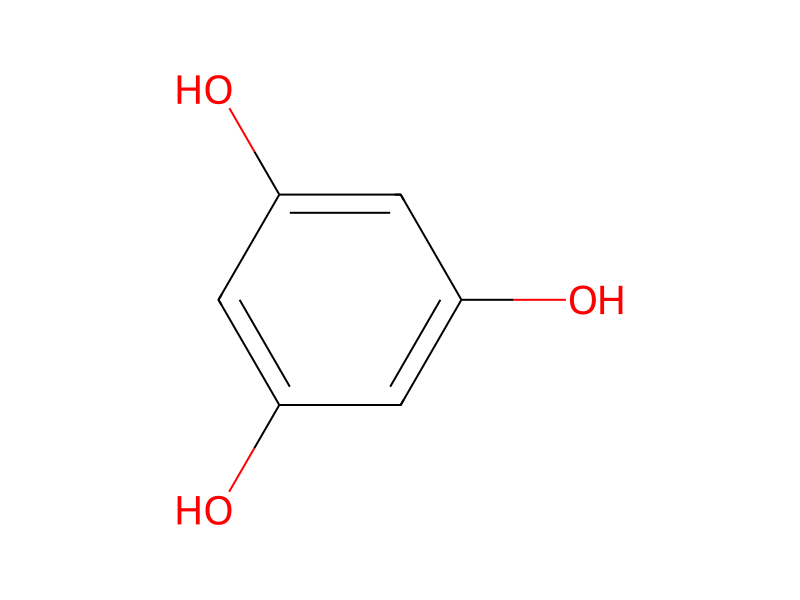 HCID 359Phloroglucinol
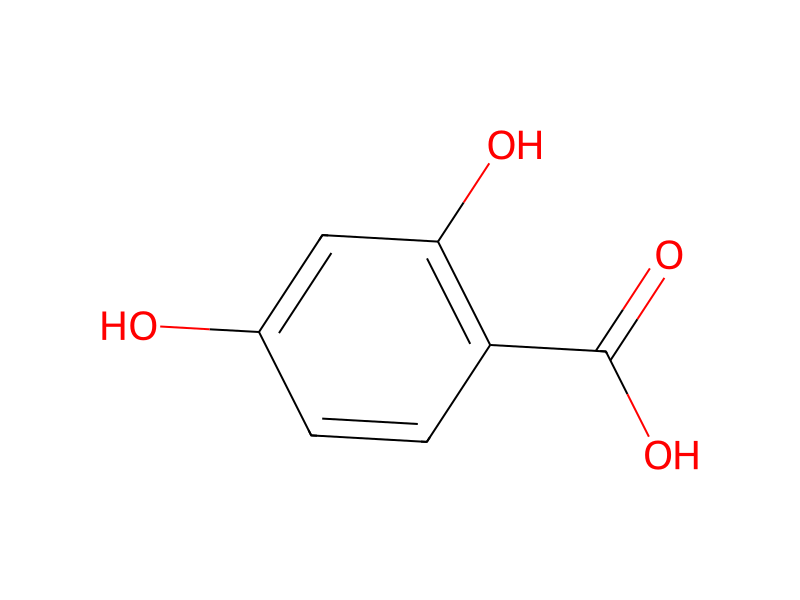 HCID 14912,4-Dihydroxybenzoic Acid
 HCID 931181,1,1-Tris(4-hydroxyphenyl)ethane
 HCID 3481481,3,5-Tris(4-hydroxyphenyl)benzene
 HCID 17820215Tri-(4-hydroxyphenyl)-phenyl methane
 HCID 218855202-(4-Hydroxyphenyl)-2-(2,4-dihydroxyphenyl)-propane
 HCID 218944334,6-Dimethyl-2,4,6-tri-(4-hydroxyphenyl)-heptane
Product 1

Procedure
The polycarbonates may, of course, be branched by incorporating small quantities of polyhydroxyl compounds, e.g. 0.05 to 2.0 mols percent (based on the quantity of bisphenols). Polycarbonates of this kind have been described, e.g. in German Offenlegungsschriften No. 1,570,533; 2,116,974 and 2,113,347, in British Patents No. 885,442 and 1,079,821 and in U.S. Pat. No. 3,544,514. The following are some of the polyhydroxyl compounds which are suitable for this purpose: Phloroglucinol, 4,6-dimethyl-2,4,6-tri-(4-hydroxyphenyl)-heptene-(2), 4,6-dimethyl-2,4,6-tri-(4-hydroxyphenyl)-heptane, 1,3,5-tri-(4-hydroxyphenyl)-benzene, 1,1,1-tri-(4-hydroxyphenyl)-ethane, tri-(4-hydroxyphenyl)-phenyl-methane, 2,2-bis-[4,4-(4,4'-dihydroxydiphenyl)-cyclohexyl]-propane, 2,4-bis-(4-hydroxyphenyl-4-isopropyl)-phenol,2,6-bis-(2'-hydroxy-5'-methyl-benzyl)-4-methylphenol, 2,4-dihydroxybenzoic acid, 2-(4-hydroxyphenyl)-2-(2,4-dihydroxyphenyl)-propane and 1,4-bis-(4',40"-dihydroxytriphenyl-methyl)-benzene.
Sources & evidence
- ORD record
- ord-6ada6bb5c4e344879e79e1c331e424be
- Source dataset
- uspto-grants-1983_03
- Patent number
- USRE031165
Reaction notes
Loading…