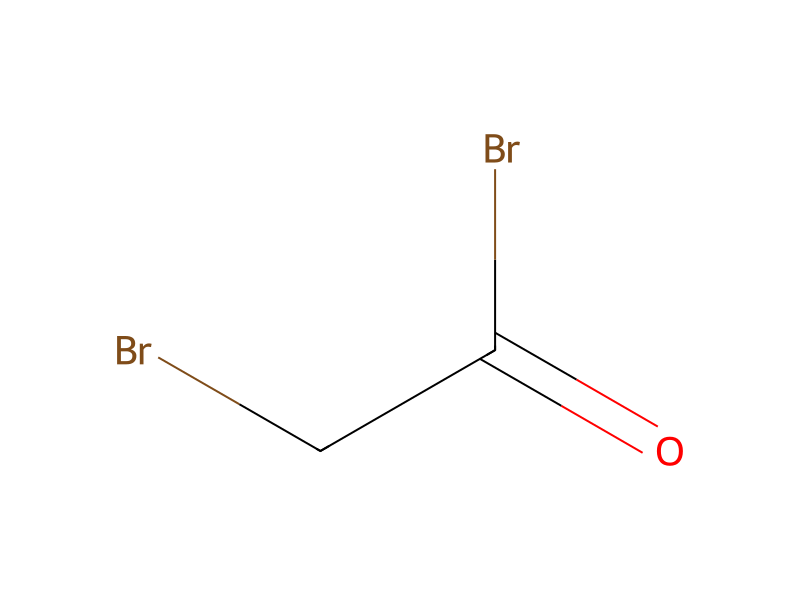
Bromoacetyl bromide → HCID 70113834, compound
Reaction equation

[CH2:1]([N:8]1[C:14](=[O:15])[C@H:13]2[CH2:16][CH2:17][CH2:18][C@H:12]2[NH:11][C:10]2[CH:19]=[CH:20][C:21]([Cl:23])=[CH:22][C:9]1=2)[C:2]1[CH:7]=[CH:6][CH:5]=[CH:4][CH:3]=1.[Br:24][CH2:25][C:26](Br)=[O:27]>C(OCC)(=O)C.CCCCCC>[CH2:1]([N:8]1[C:14](=[O:15])[C@H:13]2[CH2:16][CH2:17][CH2:18][C@H:12]2[N:11]([C:26](=[O:27])[CH2:25][Br:24])[C:10]2[CH:19]=[CH:20][C:21]([Cl:23])=[CH:22][C:9]1=2)[C:2]1[CH:3]=[CH:4][CH:5]=[CH:6][CH:7]=1Participants
4
Reactant 2

Product 1

Reagents, catalysts & solvents 1

Procedure
Using (3aR*,10aS*)-9-benzyl-7-chloro-2,3,3a,4,9,10a-hexahydrobenzo[b]cyclopenta[e][1,4]-diazepin-10(1H)-one and bromoacetyl bromide, the titled compound was synthesized in substantially the same manner as in Working Example 122 in a yield of 50%, m.p. 163°-164° C. (ethyl acetate-hexane).
Sources & evidence
- ORD record
- ord-013366a5e2ea448a86ddca5508546ba1
- Source dataset
- uspto-grants-1998_11
- Patent number
- US05834463
Reaction notes
Loading…