Resorcinol → Phenol
Reaction equation

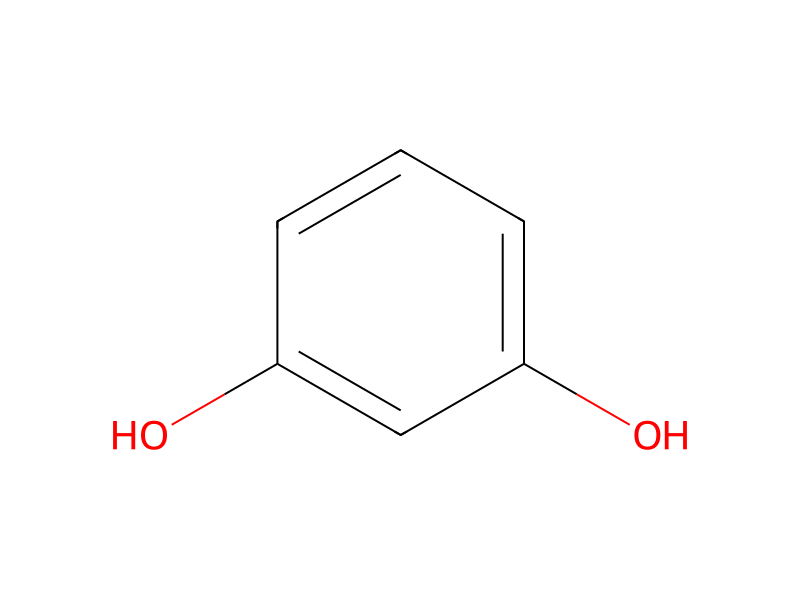
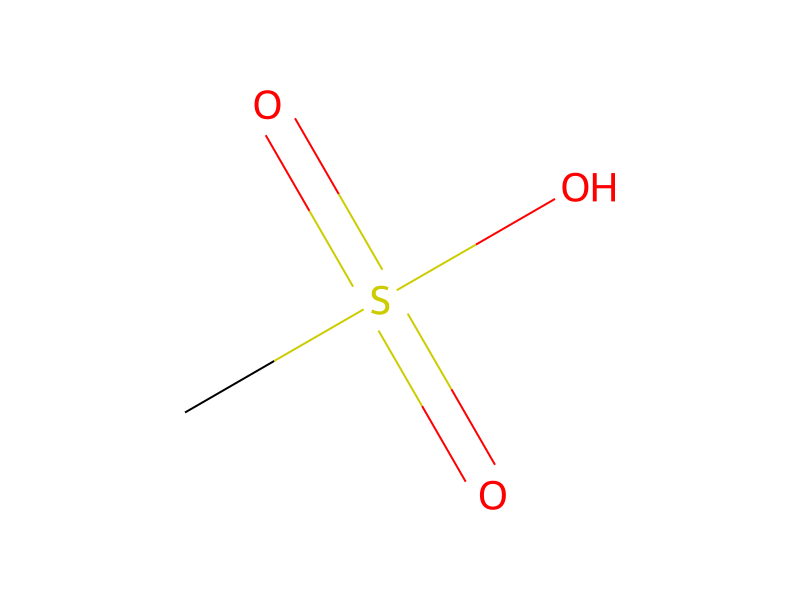
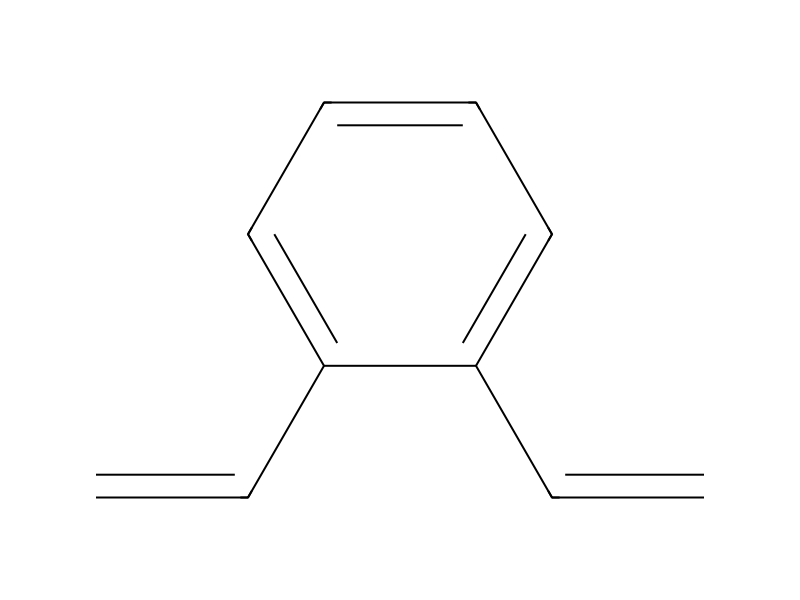
[C:1]1([CH:8]=[CH:7][CH:6]=[C:4]([OH:5])[CH:3]=1)[OH:2].[CH:9]([C:11]1[CH:16]=[CH:15][CH:14]=[CH:13][C:12]=1[CH:17]=[CH2:18])=[CH2:10].CS(O)(=O)=O.C(C1C=CC(C=C)=CC=1)(C)(C)C>>[C:1]1([OH:2])[CH:8]=[CH:7][CH:6]=[CH:4][CH:3]=1.[CH:9]([C:11]1[CH:16]=[CH:15][CH:14]=[CH:13][C:12]=1[CH:17]=[CH2:18])=[CH2:10].[C:1]1([CH:8]=[CH:7][CH:6]=[C:4]([OH:5])[CH:3]=1)[OH:2]Participants



Procedure
A series of phenol aralkylation polymers were prepared as follows. An intial DVB/resorcinol polymer was prepared using resorcinol and divinyl benzene (DVB) at a resorcinol:DVB mole ratio of about 2:1. A commercial DVB source containing a 63 wt. % DVB and 37 wt. % EVB mixture was used. The resorcinol was melted at a temperature from 140° to 170° C. in a 250 ml beaker. Methane sulfonic acid [70% MSA--0.0002 mol per mol or resorcinol] was added to the reactor as the aralkylation catalyst. The DVB then was added over five minutes. Thereafter, the resulting DVB-resorcinol polymer was further reacted with varying levels of para-tert-butylstyrene (p-tBS)(0; 0.5; 1.0; and 1.5 mole per mole of resorcinol), added over five minutes. The reaction was continued for 10 minutes at 180° C. and then the polymer was cast onto aluminum foil.
Workup
- customwas melted at a temperature from 140° to 170° C. in a 250 ml beaker
- additionadded over five minutes
Sources & evidence
- ORD record
- ord-0b390fb5eeb94352ad24a6732ef22182
- Source dataset
- uspto-grants-1998_11
- Patent number
- US05837798
Reaction notes
Loading…