Indole → 3-Chloroacetylindole
Reaction equation

[NH:1]1[C:9]2[C:4](=[CH:5][CH:6]=[CH:7][CH:8]=2)[CH:3]=[CH:2]1.N1C=CC=CC=1.[Cl:16][CH2:17][C:18](Cl)=[O:19]>C1(C)C=CC=CC=1.C(OCC)(=O)C>[Cl:16][CH2:17][C:18]([C:3]1[C:4]2[C:9](=[CH:8][CH:7]=[CH:6][CH:5]=2)[NH:1][CH:2]=1)=[O:19]Participants
6
Reactant 3
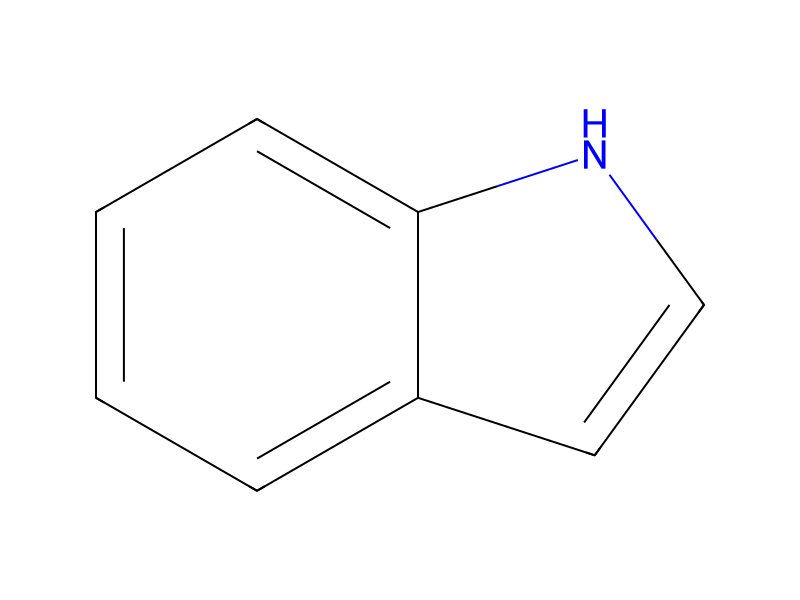


Product 1

Reagents, catalysts & solvents 2


Conditions
- Temperature
- 55 °C
Procedure
According to the method of J. Bergman et al. Tet. 29, 971-976 (1973), combine indole (11.7 g, 100 mmol), pyridine (8.1 mL, 100 mmol), and toluene (250 mL). Heat to 55° C. Add dropwise a solution of chloroacetyl chloride (8 mL, 100 mmol) in toluene (10 mL). After 2 hours, cool to ambient temperature. Dilute the reaction mixture with ethyl acetate and extract with water. Dry the organic layer over MgSO4, filter and evaporate in vacuo to give a residue. Recrystallize the residue from ethanol to give the title compound.
Workup
- temperaturecool to ambient temperature
- extractionextract with water
- dry with materialDry the organic layer over MgSO4
- filtrationfilter
- customevaporate in vacuo
- customto give a residue
- customRecrystallize the residue from ethanol
Sources & evidence
- ORD record
- ord-77966e1ea56c47ada8e82d745b51df91
- Source dataset
- uspto-grants-1998_11
- Patent number
- US05840726
Reaction notes
Loading…