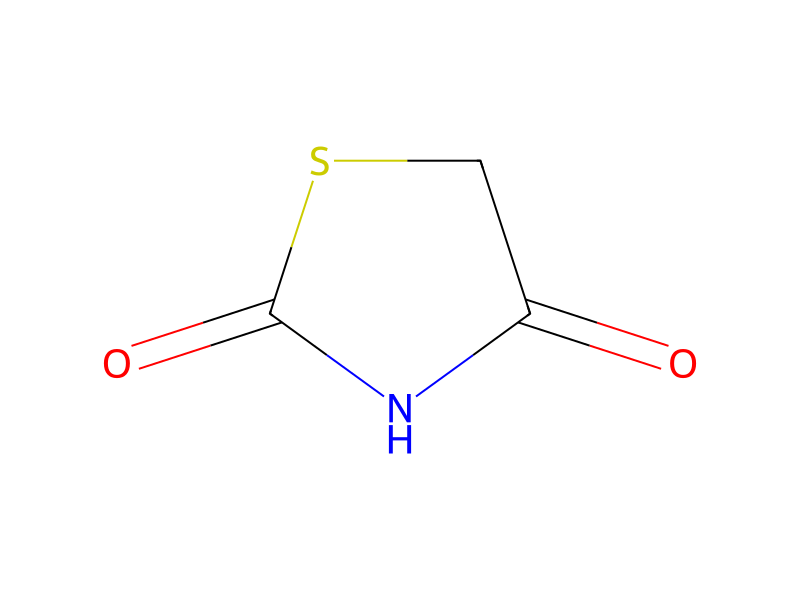
Thiazolidinedione → 3-[4-(2-Methylimidazo[1,2-a]pyridin-5-ylthio)butyl]thiazolidine-2,4-dione
Reaction equation

Cl[CH2:2][CH2:3][CH2:4][CH2:5][S:6][C:7]1[N:12]2[CH:13]=[C:14]([CH3:16])[N:15]=[C:11]2[CH:10]=[CH:9][CH:8]=1.[S:17]1[CH2:21][C:20](=[O:22])[NH:19][C:18]1=[O:23].C1CCN2C(=NCCC2)CC1>>[CH3:16][C:14]1[N:15]=[C:11]2[CH:10]=[CH:9][CH:8]=[C:7]([S:6][CH2:5][CH2:4][CH2:3][CH2:2][N:19]3[C:20](=[O:22])[CH2:21][S:17][C:18]3=[O:23])[N:12]2[CH:13]=1Participants
4



Procedure
Using 0.76 g (3.0 mmol) of 5-(4-chlorobutylthio)-2-methylimidazo[1,2-a]pyridine, 0.35 g (3.0 mmol) of thiazolidine-2,4-dione and 0.45 ml (3.0 mmol) of 1,8-diazabicyclo[5.4.0]-7-undecene, the same procedure as in Reference Example 2 was followed, to yield 0.78 g (77.7%, light yellow oily substance) of the desired product.
Sources & evidence
- ORD record
- ord-0fcb5d6fc33a4613981ea0a04354f989
- Source dataset
- uspto-grants-1998_11
- Patent number
- US05840732
Reaction notes
Loading…