1,2-Dichlorobenzene → 4-Methyltriphenylamine
Reaction equation

[C:1]1([NH:7][C:8]2[CH:13]=[CH:12][CH:11]=[CH:10][CH:9]=2)[CH:6]=[CH:5][CH:4]=[CH:3][CH:2]=1.[C:14](=O)([O-])[O-].[K+].[K+].Cl[C:21]1[CH:26]=[CH:25][CH:24]=[CH:23][C:22]=1Cl>[Cu]>[CH3:14][C:11]1[CH:10]=[CH:9][C:8]([N:7]([C:21]2[CH:26]=[CH:25][CH:24]=[CH:23][CH:22]=2)[C:1]2[CH:2]=[CH:3][CH:4]=[CH:5][CH:6]=2)=[CH:13][CH:12]=1Participants
5
Reactant 3


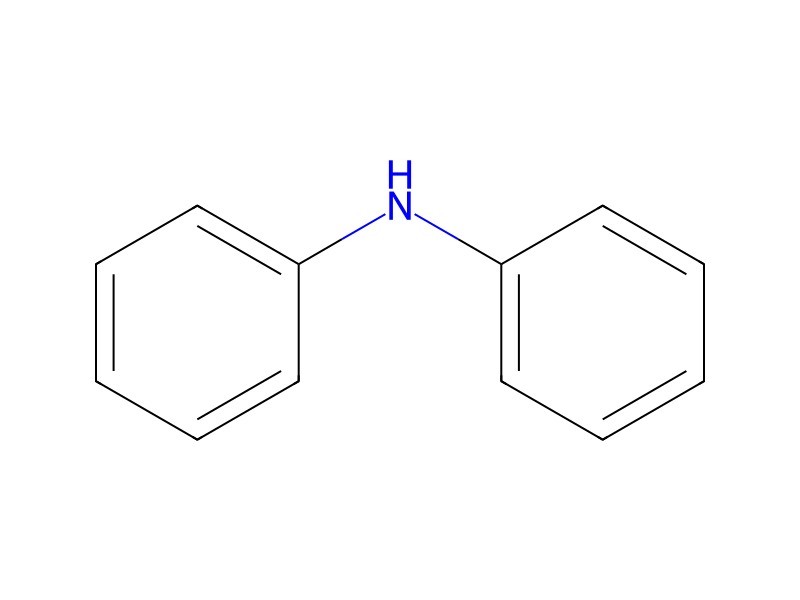
Product 1

Reagents, catalysts & solvents 1

Procedure
4.5 g (27 mmol) of diphenylamine, 11.0 g (51 mmol) of piodotoluene, 5.5 g (40 mmol) of anhydrous potassium carbonate, and 1.1 g of copper chips were added to 30 mL of o-dichlorobenzene, and the mixture was refluxed for 7 hours with stirring. Upon completion of the reaction, the solution was filtered, the filtrate was washed with a 3 to 5% aqueous solution of sodium thiosulfate and then with a saturated brine. After drying the organic layer with an anhydrous sodium sulfate, the solvent was removed. The crude product was recrystallized from ethanol, whereby 4-methyltriphenylamine was obtained in an amount of 5.7 g (81.4 %).
Workup
- temperaturethe mixture was refluxed for 7 hours
- customUpon completion of the reaction
- filtrationthe solution was filtered
- washthe filtrate was washed with a 3 to 5% aqueous solution of sodium thiosulfate
- dry with materialAfter drying the organic layer with an anhydrous sodium sulfate
- customthe solvent was removed
- customThe crude product was recrystallized from ethanol
Sources & evidence
- ORD record
- ord-d2f82166a5264480aaea4ea0441c8fca
- Source dataset
- uspto-grants-1998_11
- Patent number
- US05840816
Reaction notes
Loading…