Potassium Carbonate → Methyl 10-(4-chlorobenzenesulphonamido)decanoate
Reaction equation

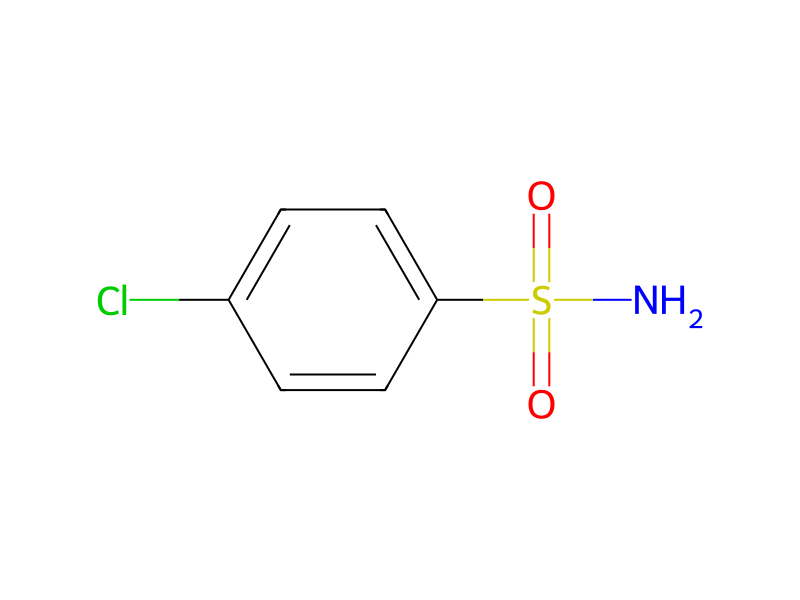
Br[CH2:2][CH2:3][CH2:4][CH2:5][CH2:6][CH2:7][CH2:8][CH2:9][CH2:10][C:11]([O:13][CH3:14])=[O:12].[Cl:15][C:16]1[CH:21]=[CH:20][C:19]([S:22]([NH2:25])(=[O:24])=[O:23])=[CH:18][CH:17]=1.C(=O)([O-])[O-].[K+].[K+]>CN(C)C=O>[CH3:14][O:13][C:11](=[O:12])[CH2:10][CH2:9][CH2:8][CH2:7][CH2:6][CH2:5][CH2:4][CH2:3][CH2:2][NH:25][S:22]([C:19]1[CH:18]=[CH:17][C:16]([Cl:15])=[CH:21][CH:20]=1)(=[O:24])=[O:23]Participants
5




Procedure
A mixture of methyl 10-bromodecanoate (1.5 g, 0.006 mol), 4-chlorobenzenesulphonamide (3.44 g, 0.018 mol), potassium carbonate (6.2 g, 0.045 mol) and dimethylformamide (50 ml) was heated at 100°-120° C. for 3 hours. After cooling, the inorganic material was removed by filtration. The filtrate was evaporated to dryness and the residue was extracted with dichloromethane. The residual oil obtained by evaporation was chromatographed on silica gel in petroleum ether (40°-60° C.) and the solid obtained on evaporation of the eluate was recrystallised (ether-pet. ether 40°-60°) to give the title compound (0.9 g, m.p. 68°-70° C.).
Workup
- temperaturewas heated at 100°-120° C. for 3 hours
- temperatureAfter cooling
- customthe inorganic material was removed by filtration
- customThe filtrate was evaporated to dryness
- extractionthe residue was extracted with dichloromethane
- customThe residual oil obtained by evaporation
- customwas chromatographed on silica gel in petroleum ether (40°-60° C.)
- customthe solid obtained on evaporation of the eluate
- customwas recrystallised (ether-pet. ether 40°-60°)
Sources & evidence
- ORD record
- ord-b8f3ea3f3bc04327ae86e2c913dffcaf
- Source dataset
- uspto-grants-1991_03
- Patent number
- US04997847
Reaction notes
Loading…