1-Piperazinecarboxylic acid, ethyl ester → Ethyl 4-(6-chloropyridazin-3-yl)piperazine-1-carboxylate
Reaction equation

[Cl:1][C:2]1[N:3]=[N:4][C:5](Cl)=[CH:6][CH:7]=1.[N:9]1([C:15]([O:17][CH2:18][CH3:19])=[O:16])[CH2:14][CH2:13][NH:12][CH2:11][CH2:10]1.C(N(CC)CC)C>CN(C)C=O>[Cl:1][C:2]1[N:3]=[N:4][C:5]([N:12]2[CH2:11][CH2:10][N:9]([C:15]([O:17][CH2:18][CH3:19])=[O:16])[CH2:14][CH2:13]2)=[CH:6][CH:7]=1Participants
5


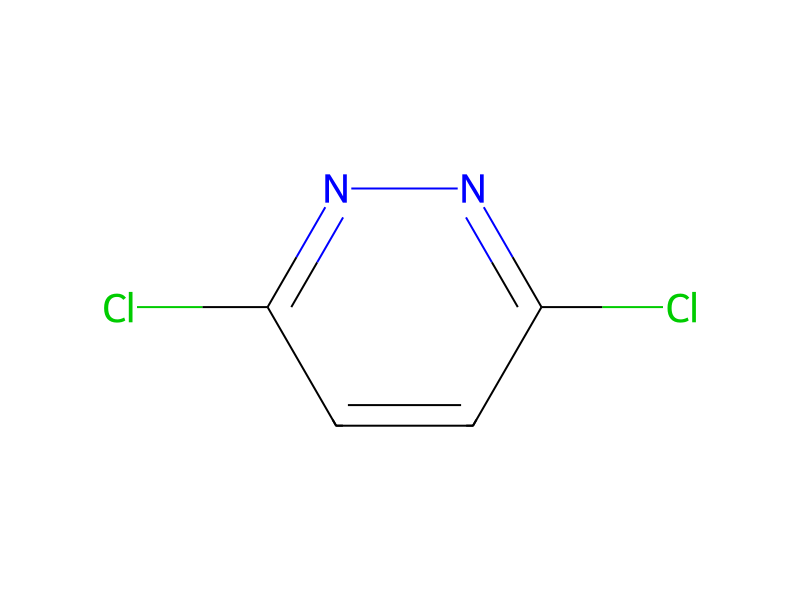


Conditions
- Temperature
- 50 °C
Procedure
To a stirred solution of 7.5 parts of 3,6-dichloropyridazine in 75 parts of N,N-dimethylformamide was added dropwise a solution of 8 parts of ethyl 1-piperazinecarboxylate and 5.6 parts of N,N-diethylethanamine in 25 parts of N,N-dimethylformamide. Upon completion, the whole was stirred overnight at a temperature of about 50° C. After cooling, the reaction mixture was poured onto water and the product was extracted with trichloromethane. The organic layer was dried, filtered and evaporated. The residue was crystallized from 2-propanol, yielding 3.6 parts of ethyl 4-(6-chloro-3-pyridazinyl)-1-piperazinecarboxylate; mp. 123.8° C. (compound 208).
Workup
- temperatureAfter cooling
- additionthe reaction mixture was poured onto water
- extractionthe product was extracted with trichloromethane
- customThe organic layer was dried
- filtrationfiltered
- customevaporated
- customThe residue was crystallized from 2-propanol
Sources & evidence
- ORD record
- ord-e07560ce263f4c45a8f565dbdb6c50ad
- Source dataset
- uspto-grants-1991_03
- Patent number
- US05001125
Reaction notes
Loading…