Hydrochloric Acid → 4-Bromo-4'-nitrobenzophenone
Reaction equation

[N+:1]([C:4]1[CH:12]=[CH:11][C:7]([C:8](Cl)=[O:9])=[CH:6][CH:5]=1)([O-:3])=[O:2].[Br:13][C:14]1[CH:19]=[CH:18][CH:17]=[CH:16][CH:15]=1.[Cl-].[Al+3].[Cl-].[Cl-].Cl>>[Br:13][C:14]1[CH:19]=[CH:18][C:17]([C:8]([C:7]2[CH:11]=[CH:12][C:4]([N+:1]([O-:3])=[O:2])=[CH:5][CH:6]=2)=[O:9])=[CH:16][CH:15]=1Participants
5

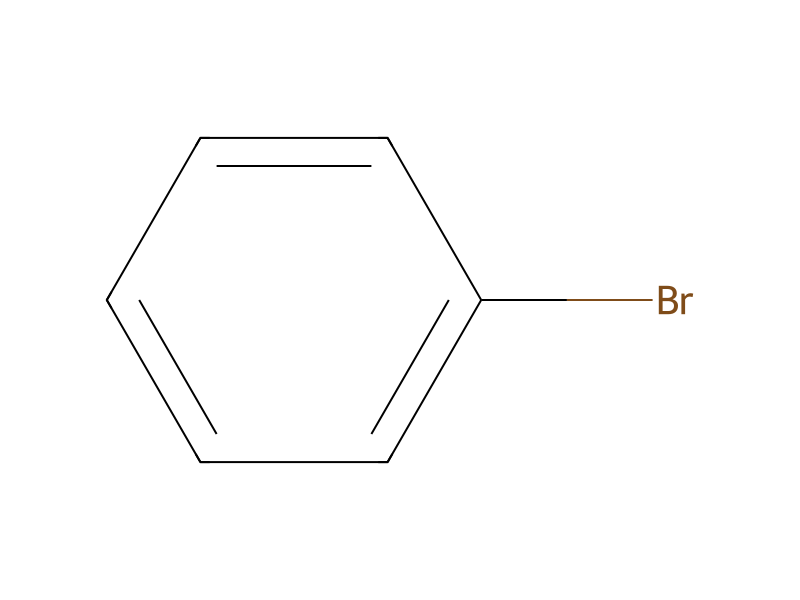



Conditions
- Temperature
- 100 °C
Procedure
In a 250 mL flask equipped with a nitrogen inlet, overhead stirring assembly, and reflux condenser were placed 4-nitrobenzoyl chloride (22.6 g, 0.122 mol), bromobenzene (100 g, 0.63 mol), and aluminum chloride (17.3 g, 0.13 mol). The mixture was heated for 3 h at 100° C., then cooled to room temperature and stirred for an additional 16 h. The mixture was poured into 1 L of acidic (HCl) ice water, and the organics were extracted using methylene chloride, dried over magnesium sulfate, and the solvents were removed under reduced pressure to yield a yellow powder. Recrystallization from acetone afforded 29.2 g (85% yield) of yellow crystals: m.p. 123°-124° C., (Lit. 122° C.). ##STR5##
Workup
- customIn a 250 mL flask equipped with a nitrogen inlet
- temperaturereflux condenser
- temperaturecooled to room temperature
- stirringstirred for an additional 16 h
- extractionthe organics were extracted
- dry with materialdried over magnesium sulfate
- customthe solvents were removed under reduced pressure
- customto yield a yellow powder
- customRecrystallization from acetone
Sources & evidence
- ORD record
- ord-6fe17835193343a7a4500ca2f185301b
- Source dataset
- uspto-grants-1995_05
- Patent number
- US05412066
Reaction notes
Loading…