Potassium Carbonate → HCID 54451121, compound
Reaction equation

[Cl:1][C:2]1[CH:7]=[C:6]([O:8][CH2:9][CH:10]=[C:11]([Cl:13])[Cl:12])[CH:5]=[C:4]([Cl:14])[C:3]=1[OH:15].C(=O)([O-])[O-].[K+].[K+].[CH2:22](Br)[CH:23]=[CH:24][C:25]1[CH:30]=[CH:29][CH:28]=[CH:27][CH:26]=1>CN(C)C=O>[Cl:1][C:2]1[CH:7]=[C:6]([O:8][CH2:9][CH:10]=[C:11]([Cl:13])[Cl:12])[CH:5]=[C:4]([Cl:14])[C:3]=1[O:15][CH2:22][CH:23]=[CH:24][C:25]1[CH:30]=[CH:29][CH:28]=[CH:27][CH:26]=1Participants
5
Reactant 3

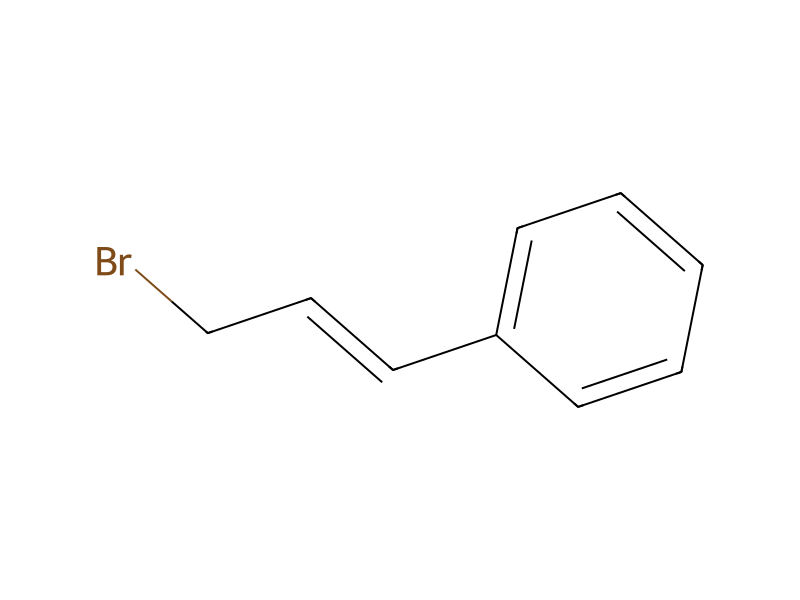

Product 1

Reagents, catalysts & solvents 1

Procedure
To a mixture of 0.62 g of 2,6-dichloro-4-(3,3,-dichloro-2-propenyloxy)phenol, 0.33 g of potassium carbonate and 20 ml of N,N-dimethylformamide was added dropwise a solution of 0.43 g of cinnamyl bromide dissolved in 5 ml of N,N-dimethylformamide, while stirring at room temperature. After stirring at room temperature for 7 hours, the reaction mixture was poured into ice-water, and extracted twice with 50 ml of diethyl ether. The combined ether layer was washed with water, dried with anhydrous magnesium sulfate, and concentrated to obtain a crude product. The crude product was subjected to silica gel chromatography, which afforded 0.70 g of 3,5-dichloro-4-(cinnamyloxy)-1-(3,3-dichloro-2-propenyloxy)benzene (80% yield), m.p. 51.3° C.
Workup
- stirringAfter stirring at room temperature for 7 hours
- extractionextracted twice with 50 ml of diethyl ether
- washThe combined ether layer was washed with water
- dry with materialdried with anhydrous magnesium sulfate
- concentrationconcentrated
- customto obtain a crude product
Sources & evidence
- ORD record
- ord-48fd9f21db16440092f9836c66e96a08
- Source dataset
- uspto-grants-1999_02
- Patent number
- US05872137
Reaction notes
Loading…