Ammonia → HCID 20237863, compound
Reaction equation

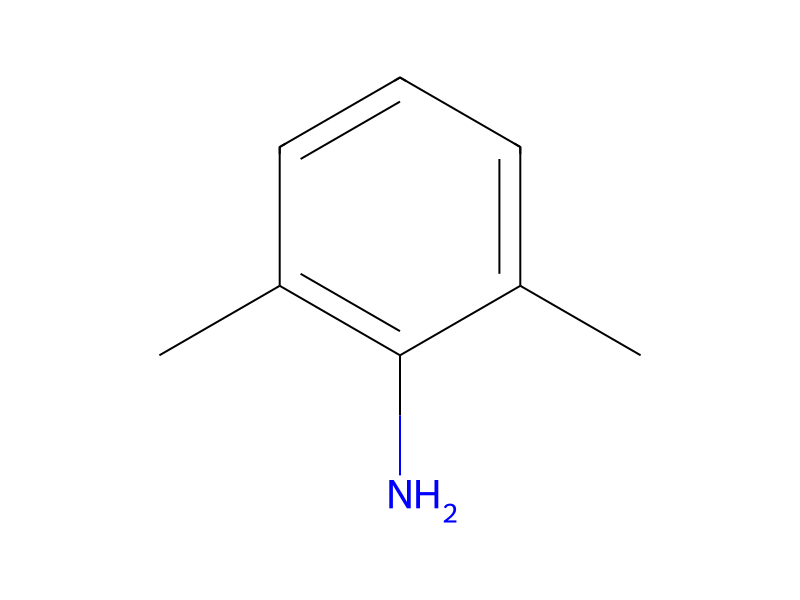
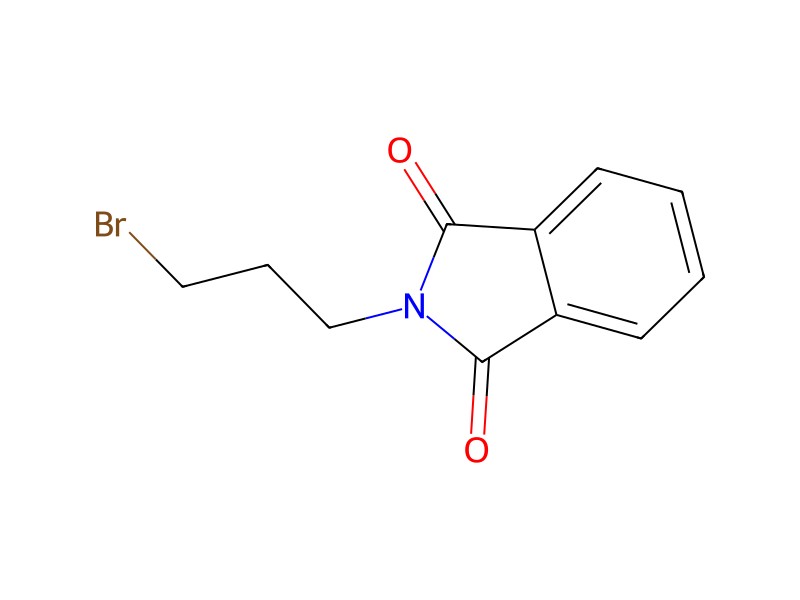
Br[CH2:2][CH2:3][CH2:4][N:5]1[C:9](=[O:10])[C:8]2=[CH:11][CH:12]=[CH:13][CH:14]=[C:7]2[C:6]1=[O:15].[CH3:16][C:17]1[CH:23]=[CH:22][CH:21]=[C:20]([CH3:24])[C:18]=1[NH2:19].Br.N>C(OCC)C>[C:9]1(=[O:10])[N:5]([CH2:4][CH2:3][CH2:2][NH:19][C:18]2[C:20]([CH3:24])=[CH:21][CH:22]=[CH:23][C:17]=2[CH3:16])[C:6](=[O:15])[C:7]2=[CH:14][CH:13]=[CH:12][CH:11]=[C:8]12Participants
6
Reactant 4


Product 1

Reagents, catalysts & solvents 1

Procedure
50 g. N-(3-Bromopropyl)-phthalimide and 50 g. 2,6-dimethylaniline are stirred for 5 hours at 100° C. After adding diethyl ether to the reaction mixture, it is filtered off with suction to give 69 g. of the hydrobromide (m.p. 226°-228° C.). The base is liberated from aqueous solution by adding a concentrated aqueous solution of ammonia. There are obtained 48 g. (83% of theory) of the desired product in the form of colorless crystals; m.p. 97°-98° C.
Workup
- filtrationis filtered off with suction
- customto give 69 g
- customThere are obtained 48 g
Sources & evidence
- ORD record
- ord-e9ef9ff020134831a565c2620475d979
- Source dataset
- uspto-grants-1986_08
- Patent number
- US04608383
Reaction notes
Loading…