Ampicillin → Maleic Acid
Reaction equation

CC1(C)S[C@@H]2[C@H](NC([C@H](N)C3C=CC=CC=3)=O)C(=O)N2[C@H]1C(O)=O.[C:25]([OH:32])(=[O:31])/[CH:26]=[CH:27]\[C:28]([OH:30])=[O:29]>[Pt]>[C:25]([OH:32])(=[O:31])/[CH:26]=[CH:27]/[C:28]([OH:30])=[O:29].[C:25]([OH:32])(=[O:31])/[CH:26]=[CH:27]\[C:28]([OH:30])=[O:29]Participants
Reactant 2


Product 2
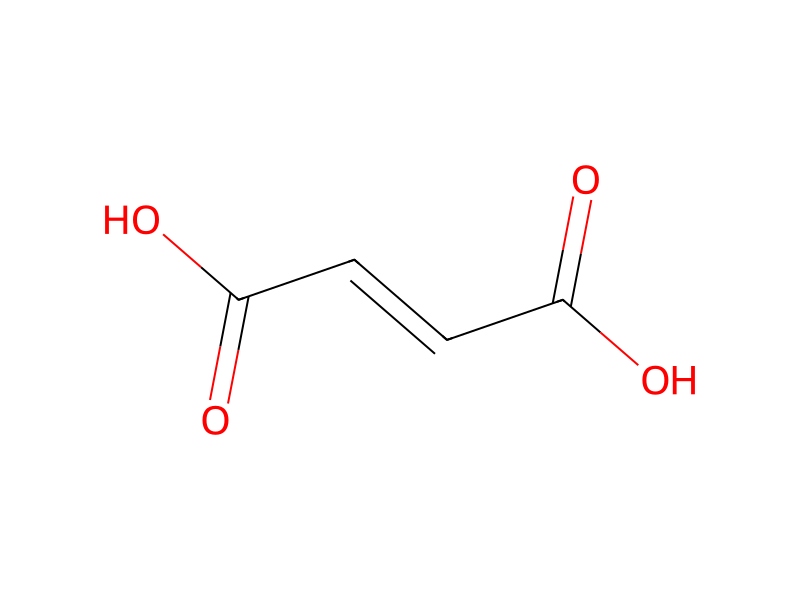
Reagents, catalysts & solvents 1

Procedure
The ampicillin-resistant transformant was selected by measuring its enzyme activity of isomerizing maleic acid. The ampicillin-resistant transformant was inoculated via a loop of platinum into 3 ml maleic acid medium (Table 1) containing 100 γ ampicillin and cultured overnight, and the microorganism was recovered by centrifuging 1.5 ml of the culture. The recovered microorganism was suspended in 1 ml of 20% maleic acid substrate solution (Table 2) and reacted at 30° C. overnight. This substrate solution contained aspartase prepared from E. coli so that fumaric acid formed by isomerization of maleic acid was converted into L-aspartic acid. After overnight reaction, a part of the reaction solution was diluted 400-fold with distilled water and measured for its formed L-aspartic acid by HPLC analysis. The conditions for HPLC analysis were as described in item (2) in Example 1.
Workup
- customthe microorganism was recovered
- customreacted at 30° C. overnight
- customprepared from E
Sources & evidence
- ORD record
- ord-6d54da814d2d4eabac67e5fa5a5b25b8
- Source dataset
- uspto-grants-2000_10
- Patent number
- US06133014
Reaction notes
Loading…