Hydrogen Peroxide → 3-chloro-2-cyanopyridine-N-oxide
Reaction equation

[Cl:1][C:2]1[C:3]([C:8]#[N:9])=[N:4][CH:5]=[CH:6][CH:7]=1.OO.S([O-])([O-])=[O:13].[Na+].[Na+]>C(O)(=O)C.O>[Cl:1][C:2]1[C:3]([C:8]#[N:9])=[N+:4]([O-:13])[CH:5]=[CH:6][CH:7]=1Participants
Reactant 3

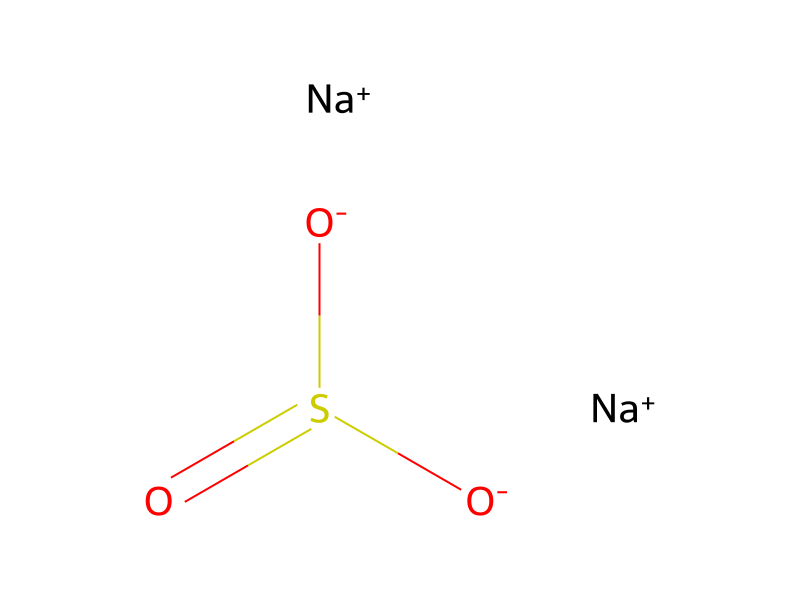

Product 1

Reagents, catalysts & solvents 2


Conditions
- Temperature
- 90 °C
Procedure
A solution of 3-chloro-2-cyanopyridine (40 g, 0.29 mol) in acetic acid (500 mL) was treated dropwise with hydrogen peroxide (30%, 52 g, 0.45 mol), stirred at 90° C. for 18 hours, cooled to 25° C., treated dropwise with a solution of sodium sulfite (57 g, 0.45 mol) in water, concentrated to remove the bulk of the acetic acid and partitioned between 1M NaOH and methylene chloride. The methylene chloride layer was dried (MgSO4) and concentrated, and the residue was recrystallized from ethyl acetate to provide 23 g of 3-chloro-2-cyanopyridine--N-oxide, a portion of which (12.2 g, 79 mmol) was dissolved in DMF (160 mL) cooled to 0° C., treated sequentially with ethyl thioglycolate (7.1 mL, 79 mmol) and portionwise with sodium methoxide (8.5 g, 160 mmol), stirred for 1 hour and poured onto ice. The resulting solid was collected by filtration, washed with water, dissolved in methylene chloride, dried (MgSO4), concentrated and recrystallized from ethyl acetate to provide 10.6 g of methyl 3-amino-thieno[3,2-b]pyridine-4-oxide carboxylate, a portion of which (10.6 g, 47 mmol) was mixed with phosphorous oxychloride (100 mL), heated to 80° C. for 30 minutes, concentrated and partitioned between methylene chloride and 5% aqueous NaHCO3 solution. The methylene chloride layer was dried (MgSO4) and concentrated, and the residue was chromatographed on silica gel with 5:1 hexanes/ethyl acetate to first provide methyl 3-amino-5-chloro-thieno[3,2-b]pyridine-2-carboxylate followed by the title compound. MS (DCI/NH3) m/e 243 (M+H)+.
Workup
- temperaturecooled to 25° C.
- concentrationconcentrated
- customto remove the bulk of the acetic acid
- custompartitioned between 1M NaOH and methylene chloride
- dry with materialThe methylene chloride layer was dried (MgSO4)
- concentrationconcentrated
- customthe residue was recrystallized from ethyl acetate
Sources & evidence
- ORD record
- ord-b963c05e4ef24a5b806f4fe9f397b9cc
- Source dataset
- uspto-grants-2000_10
- Patent number
- US06133275
Reaction notes
Loading…