Hydrochloric Acid → 1-Cyclopropanecarbonyl-2-(5,6-dichloro-3-pyridinecarbonyl)-hydrazine
Reaction equation

[CH:1]1([C:4]([NH:6][NH2:7])=[O:5])[CH2:3][CH2:2]1.[Cl:8][C:9]1[C:10]([Cl:18])=[N:11][CH:12]=[C:13]([CH:17]=1)[C:14](Cl)=[O:15].Cl>[OH-].[Na+].C(COC)OC>[CH:1]1([C:4]([NH:6][NH:7][C:14]([C:13]2[CH:12]=[N:11][C:10]([Cl:18])=[C:9]([Cl:8])[CH:17]=2)=[O:15])=[O:5])[CH2:3][CH2:2]1Participants
6
Reactant 3


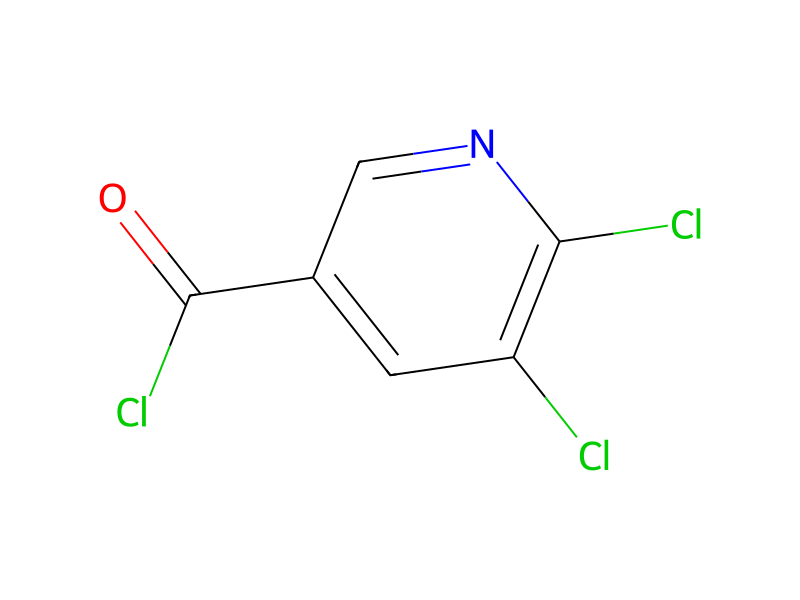
Product 1

Reagents, catalysts & solvents 2


Conditions
- Temperature
- 0 °C
Procedure
A mixture of cyclopropanecarboxylic acid hydrazide (1.6 g, 16 mmol) in 5% aqueous sodium hydroxide (50 mL) was cooled to 0° C. with stirring and a solution of 5,6-dichloronicotinoyl chloride (3.1 g, 14.8 mmol) in dimethoxyethane (10 mL) added over 20 minutes. This was stirred at room temperature overnight, acidified to pH 3-4 with 1N hydrochloric acid and filtered. The resulting tan solid was dried to give the desired product (1.4 g, 35%).
Workup
- stirringThis was stirred at room temperature overnight
- filtrationfiltered
- customThe resulting tan solid was dried
Sources & evidence
- ORD record
- ord-fc1cecb051884870bd2b9f77aa13ef55
- Source dataset
- uspto-grants-2000_10
- Patent number
- US06133294
Reaction notes
Loading…