Benzene → (S)-4-(2,6-dichlorobenzylideneamino)-5-fluoropentanoic acid, methyl ester
Reaction equation

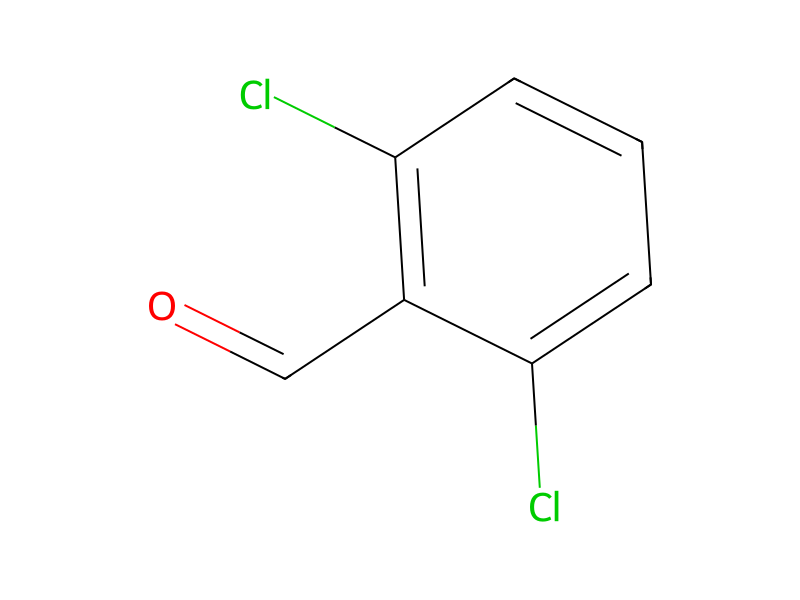
Cl.[CH3:2][O:3][C:4](=[O:11])[CH2:5][CH2:6][C@H:7]([NH2:10])[CH2:8][F:9].C(N(CC)CC)C.C1C=CC=CC=1.[Cl:25][C:26]1[CH:33]=[CH:32][CH:31]=[C:30]([Cl:34])[C:27]=1[CH:28]=O>C(OCC)(=O)C>[Cl:25][C:26]1[CH:33]=[CH:32][CH:31]=[C:30]([Cl:34])[C:27]=1[CH:28]=[N:10][C@H:7]([CH2:8][F:9])[CH2:6][CH2:5][C:4]([O:3][CH3:2])=[O:11]Participants
6
Reactant 4



Product 1

Reagents, catalysts & solvents 1

Procedure
0.36 g of 4 and 0.27 ml of triethylamine were mixed with 20 ml of benzene containing 0.5 g of 3A molecular sieve. 0.33 g of 2,6-dichlorobenzaldehyde was added and the mixture was stirred at room temperature overnight. 20 ml of ethyl acetate was added to the mixture, then it was filtered and the solvent was evaporated from the filtrate. The residue was dissolved in ethyl acetate, the solution was washed with saturated aqueous sodium bicarbonate solution, dried (Na2SO4) and the solvent was evaporated from the filtrate. The residue was thin layer chromatographed, using a 4:16:80 v:v:v mixture of tetrahydrofuran, ethyl acetate and hexane as eluent. Workup gave 20, as a yellow oil.
Workup
- filtrationit was filtered
- customthe solvent was evaporated from the filtrate
- dissolutionThe residue was dissolved in ethyl acetate
- washthe solution was washed with saturated aqueous sodium bicarbonate solution
- dry with materialdried (Na2SO4)
- customthe solvent was evaporated from the filtrate
- customchromatographed
- additionv:v mixture of tetrahydrofuran, ethyl acetate and hexane as eluent
Sources & evidence
- ORD record
- ord-1c9b5efc9157496f8d01091c19ce70b2
- Source dataset
- uspto-grants-1985_07
- Patent number
- US04528028
Reaction notes
Loading…