Diphosgene → Isopropyl 2-chloro-4-fluoro-5-isocyanatobenzoate
Reaction equation

Cl[C:2](OC(Cl)(Cl)Cl)=[O:3].[Cl:9][C:10]1[C:16]([C:17]([O:19][CH:20]([CH3:22])[CH3:21])=[O:18])=[CH:15][C:13]([NH2:14])=[C:12]([F:23])[CH:11]=1>C(OCC)(=O)C>[Cl:9][C:10]1[C:16]([C:17]([O:19][CH:20]([CH3:21])[CH3:22])=[O:18])=[CH:15][C:13]([N:14]=[C:2]=[O:3])=[C:12]([F:23])[CH:11]=1Participants
4
Reactant 2
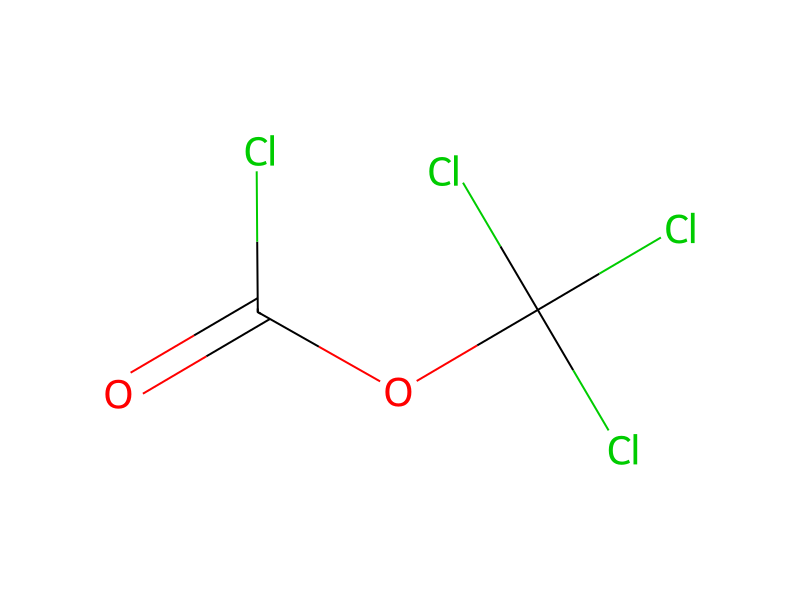

Product 1

Reagents, catalysts & solvents 1

Conditions
- Temperature
- 0 °C
Procedure
5.4 ml (0.045 mol) of trichloromethyl chloroformate were added to 30 ml of ethyl acetate. The resulting solution was cooled to 0° C. A solution of 13.9 g (0.06 mol) of 4-chloro-2-fluoro-5-isopropoxycarbonylaniline in 25 ml of ethyl acetate were added dropwise to the above cooled solution over a period of 15 minutes. The mixture was stirred at a temperature of 0° to 10° C. for an hour, and then refluxed for two hours. The reaction mixture was concentrated to give 15.45 g (yield 99.9%) of the desired product as nearly white crystals with a melting point of 41°-43° C.
Workup
- temperaturerefluxed for two hours
- concentrationThe reaction mixture was concentrated
Sources & evidence
- ORD record
- ord-a8bd81d87abc4eeabdbc171b8351d123
- Source dataset
- uspto-grants-1985_07
- Patent number
- US04531964
Reaction notes
Loading…