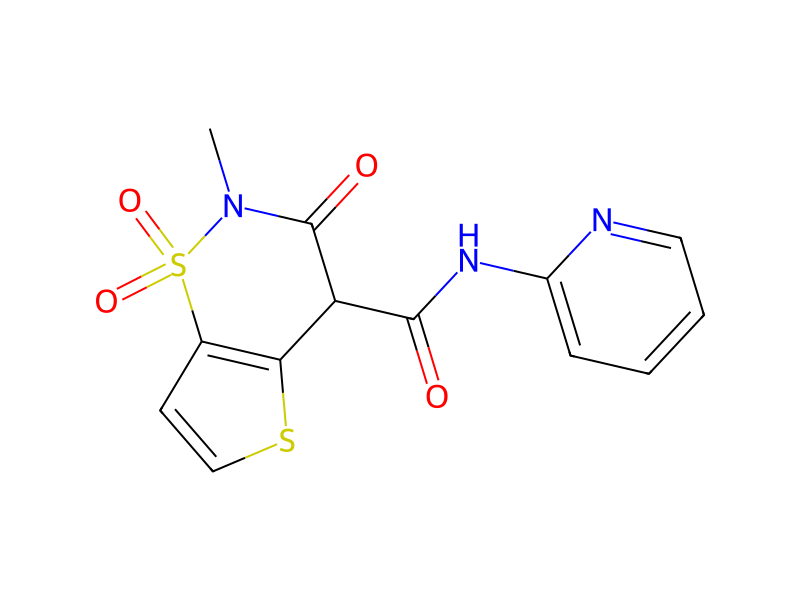
O-Xylene → 3,4-Dihydro-2-methyl-3-oxo-4-(2-pyridyl-carbamoyl)-2H-thieno [2,3-e] 1,2-thiazine 1,1-dioxide
Reaction equation

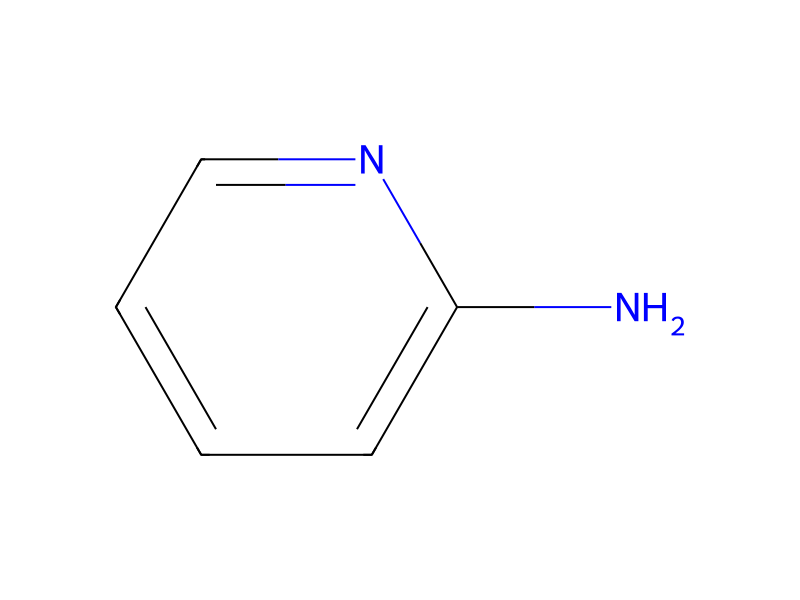
CO[C:3]([CH:5]1[C:10]2[S:11][CH:12]=[CH:13][C:9]=2[S:8](=[O:15])(=[O:14])[NH:7][C:6]1=[O:16])=[O:4].[NH2:17][C:18]1[CH:23]=[CH:22][CH:21]=[CH:20][N:19]=1.[C:24]1(C)C(C)=CC=CC=1>>[CH3:24][N:7]1[C:6](=[O:16])[CH:5]([C:3](=[O:4])[NH:17][C:18]2[CH:23]=[CH:22][CH:21]=[CH:20][N:19]=2)[C:10]2[S:11][CH:12]=[CH:13][C:9]=2[S:8]1(=[O:14])=[O:15]Participants
4


Procedure
0.3 G. of 3,4-dihydro-4-methoxycarbonyl-3-oxo-2H-thieno[ 2,3-e] 1,2-thiazine 1,1-dioxide and 0.13 g. of 2-aminopyridine are dissolved in 30 ml. of absolute xylene and the solution is heated for 1 hour under reflux. After cooling, the crystals are removed by filtration and recrystallized from glacial acetic acid. 3,4-Dihydro-2-methyl-3-oxo-4-(2-pyridyl-carbamoyl)-2H-thieno [2,3-e] 1,2-thiazine 1,1-dioxide, melting point 225° C. to 256° C. (decomposition), is obtained.
Workup
- temperatureunder reflux
- temperatureAfter cooling
- customthe crystals are removed by filtration
- customrecrystallized from glacial acetic acid
Sources & evidence
- ORD record
- ord-65153b818ef64f96842d37cb1f909119
- Source dataset
- uspto-grants-1978_05
- Patent number
- US04090020
Reaction notes
Loading…