Water → Benzyl 3-hydroxypyrrolidine-1-carboxylate
Reaction equation

[NH:1]1[CH2:5][CH2:4][CH:3]([OH:6])[CH2:2]1.[CH2:7]([O:14][C:15](Cl)=[O:16])[C:8]1[CH:13]=[CH:12][CH:11]=[CH:10][CH:9]=1.O>C(Cl)(Cl)Cl.C(N(CC)CC)C>[CH2:7]([O:14][C:15]([N:1]1[CH2:5][CH2:4][CH:3]([OH:6])[CH2:2]1)=[O:16])[C:8]1[CH:13]=[CH:12][CH:11]=[CH:10][CH:9]=1Participants
6
Reactant 3


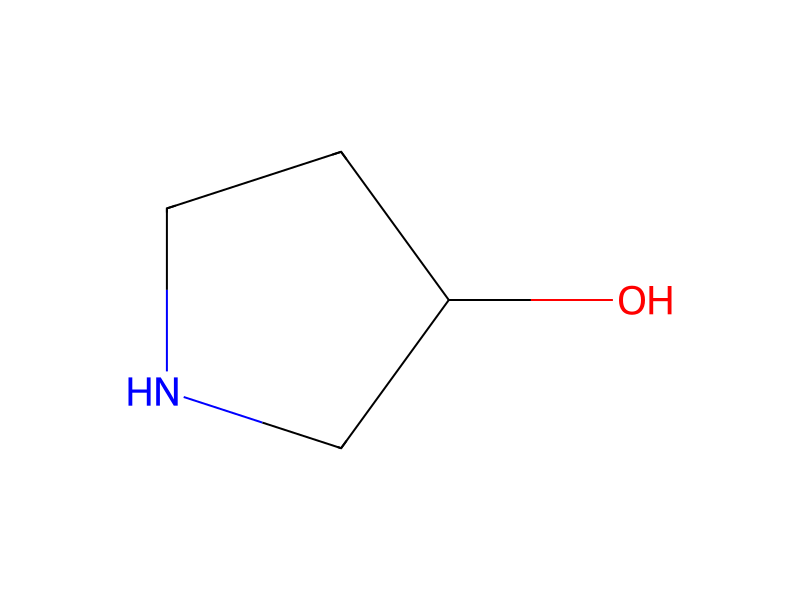
Product 1

Reagents, catalysts & solvents 2


Procedure
30 g of 3-pyrrolidinol was dissolved in 500 ml of chloroform, to which 53 ml of triethylamine was added, followed by gradually dropping 52 ml of benzyloxycarbonyl chloride at room temperature. After completion of the reaction, the reaction solution was poured into water and extracted with chloroform. The solvent was distilled off under reduced pressure and the resultant residue was purified by column chromatography (eluting solvent: hexane-ethyl acetate) to obtain 70.67 g of the intended compound.
Workup
- additionwas added
- customat room temperature
- customAfter completion of the reaction
- extractionextracted with chloroform
- distillationThe solvent was distilled off under reduced pressure
- customthe resultant residue was purified by column chromatography (eluting solvent: hexane-ethyl acetate)
Sources & evidence
- ORD record
- ord-622ec98462384e448b3f2b77ee2bbe73
- Source dataset
- uspto-grants-1996_01
- Patent number
- US05482937
Reaction notes
Loading…