Potassium Carbonate → 2-[1,3]Dioxolan-2-yl-vinylpyridine
Reaction equation
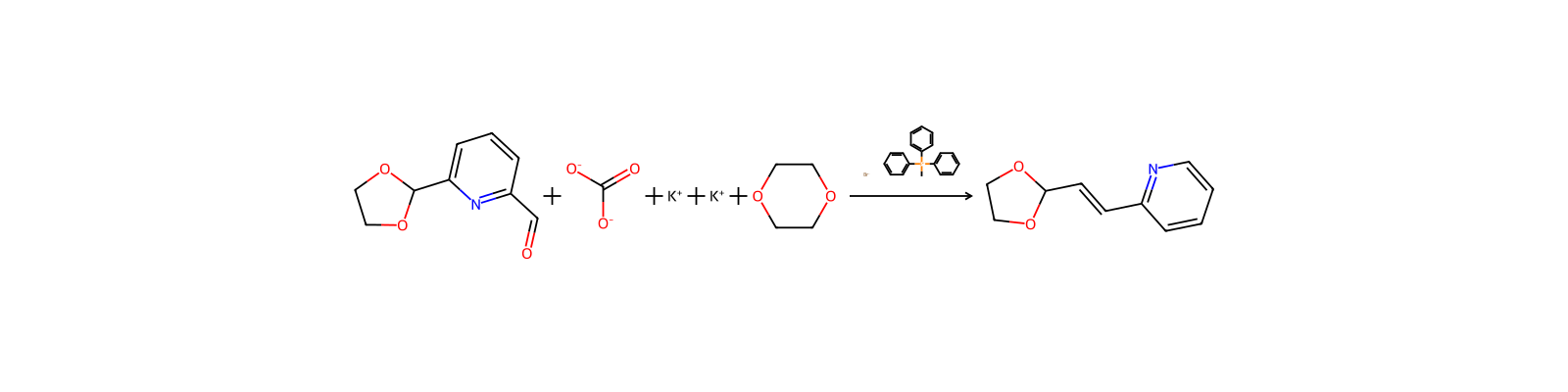
O1CCOC1[C:6]1[N:11]=[C:10]([CH:12]=O)[CH:9]=[CH:8][CH:7]=1.C(=O)([O-])[O-].[K+].[K+].[O:20]1[CH2:25][CH2:24][O:23][CH2:22][CH2:21]1>[Br-].C[P+](C1C=CC=CC=1)(C1C=CC=CC=1)C1C=CC=CC=1>[O:20]1[CH2:25][CH2:24][O:23][CH:22]1[CH:21]=[CH:12][C:10]1[CH:9]=[CH:8][CH:7]=[CH:6][N:11]=1Participants
5




Procedure
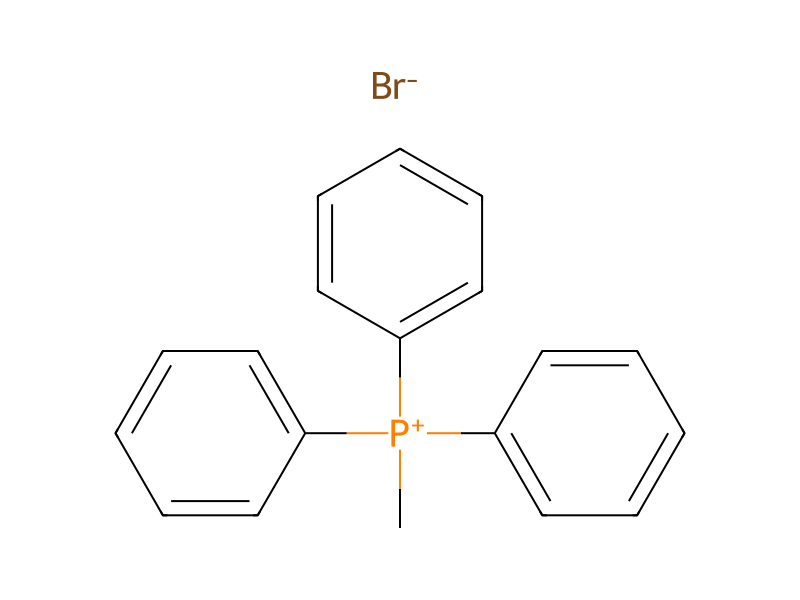
A mixture of 3.10 g of 6-[1,3]dioxolan-2-yl-pyridine-2-carbaldehyde (17.3 mmol), 9.26 g of (methyl)triphenylphosphonium bromide (25.9 mmol) and 4.80 g of potassium carbonate (34.8 mmol) in 60 ml of 1,4-dioxane is maintained under reflux for 5 hours. The solid is removed by filtration and then the solvent is evaporated off. The residue is taken up in ethyl acetate, the solution is washed with water and then with a saturated aqueous solution of sodium chloride, dried over magnesium sulfate and filtered. After evaporation of the solvent, the title compound is isolated by chromatography on a silica column (eluent: hexane/ethyl acetate; 80:20). 1.63 g of a yellow oil are obtained.
Workup
- temperatureis maintained
- temperatureunder reflux for 5 hours
- customThe solid is removed by filtration
- customthe solvent is evaporated off
- washthe solution is washed with water
- dry with materialwith a saturated aqueous solution of sodium chloride, dried over magnesium sulfate
- filtrationfiltered
- customAfter evaporation of the solvent
Sources & evidence
- ORD record
- ord-b15253ec991b4410a937a7244abbc856
- Source dataset
- uspto-grants-2000_02
- Patent number
- US06020345
Reaction notes
Loading…