Carbon Dioxide → Phenylacetic Acid
Reaction equation

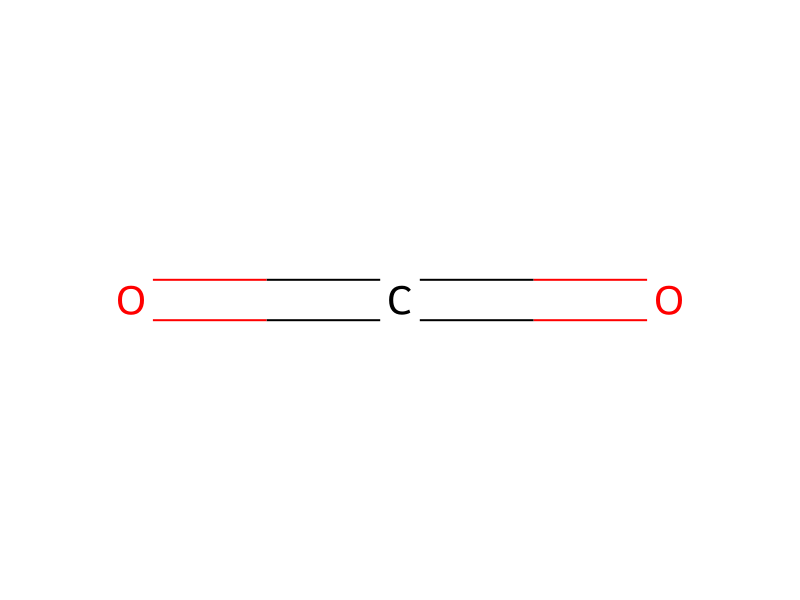
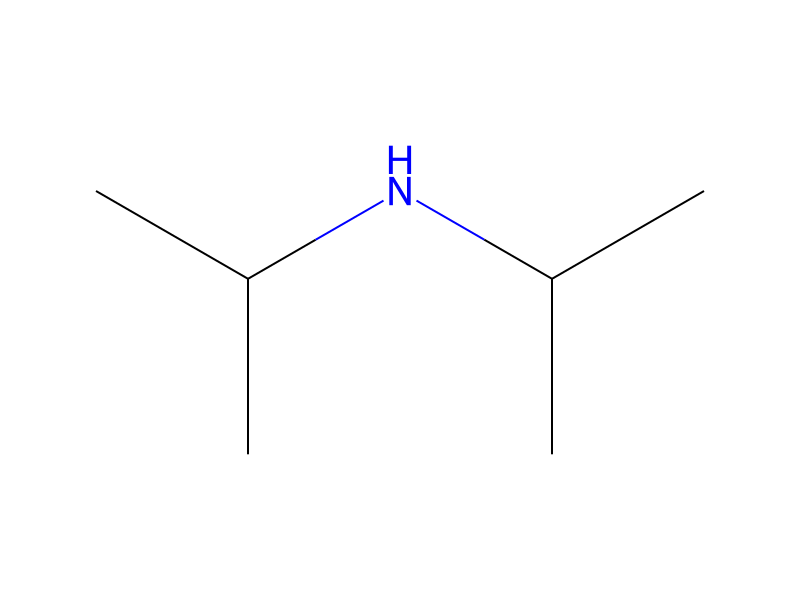
[C:1]1([Na])[CH:6]=[CH:5][CH:4]=[CH:3][CH:2]=1.[Na].Cl[C:10]1C=CC=CC=1.[C:16](=[O:18])=[O:17]>C1(C)C=CC=CC=1.C(NC(C)C)(C)C.O>[C:1]1([CH2:10][C:16]([OH:18])=[O:17])[CH:6]=[CH:5][CH:4]=[CH:3][CH:2]=1Participants



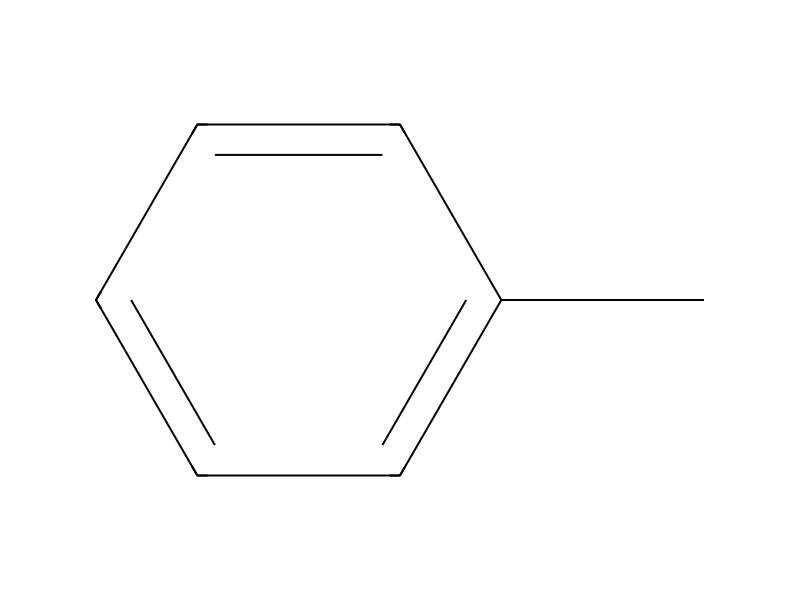
Conditions
- Temperature
- 20 °C
Procedure
A toluene (2 g) solution containing 0.21 g of diisopropyl amine (2.07 mmol, 2 mol % (mol % on the basis of phenyl sodium, which is also used hereinafter in the same meaning)) was added to phenyl sodium, which had been prepared by reacting 5.0 g (0.217 mol) of sodium dispersion and 11.6 g (0.103 mol) of chlorobenzene in 50 g of toluene (phenyl sodium was formed at the yield of about 100%, hereinafter the same as the above), at room temperature (about 20° C.), and then the reaction mixture was stirred for 2 hours. As the reaction proceeded, slight generation of heat occurred and a dark violet-colored slurry turned to a greenish brown-colored slurry. After that, an excess amount of dry ice was cast into the resultant slurry, little by little, keeping the reaction temperature at the range of from -10° C. to 0° C., and then the slurry was subjected to hydrolysis with 30 ml of water. The resulting aqueous layer was fractionated, and then it was washed with 10 g of toluene. After that, the aqueous solution was subjected to acid crystallization with concentrated hydrochloric acid, to give 13.2 g of phenylacetic acid (0.097 mol, 94.2% (the yield based on chlorobenzene, which will be used hereinafter in the same meaning), m.p. 75 to 77° C.) as white crystals. At that time, almost no benzoic acid derived from phenyl sodium was detected. This fact indicates that phenyl sodium was almost quantitatively changed to benzyl sodium by the presence of the diisopropylamine catalyst.
Workup
- customhad been prepared
- customwas formed at the yield of about 100%
- temperatureslight generation of heat
- customof from -10° C. to 0° C.
- washit was washed with 10 g of toluene
- customAfter that, the aqueous solution was subjected to acid crystallization with concentrated hydrochloric acid
Sources & evidence
- ORD record
- ord-fd64b9e8803c49c088fc3c17bdd33ab9
- Source dataset
- uspto-grants-2000_02
- Patent number
- US06024897
Reaction notes
Loading…