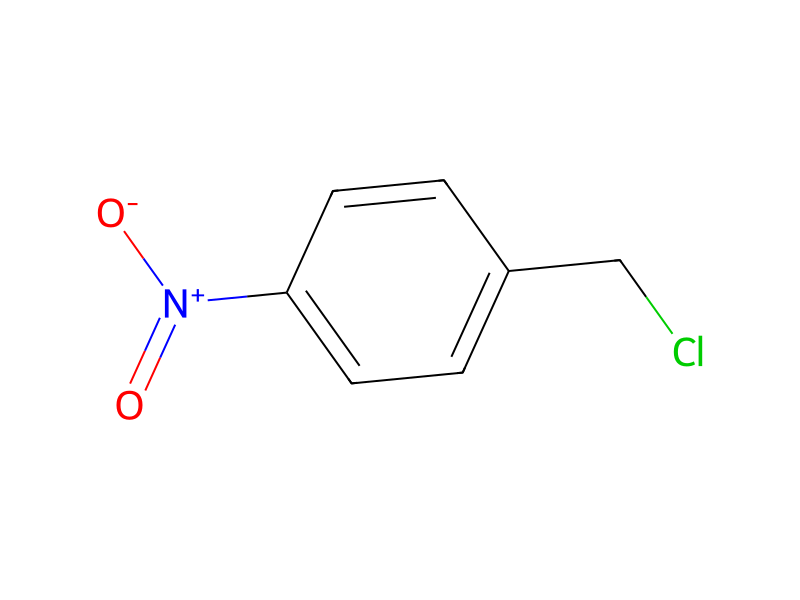
4-Nitrobenzyl chloride → 3-(4-Nitrobenzyl)-5-(3,4-dimethoxyphenyl)-6-ethyl-3,6-dihydro-1,3,4-thiadiazin-2-one
Reaction equation

[CH3:1][O:2][C:3]1[CH:4]=[C:5]([C:11]2[CH:16]([CH2:17][CH3:18])[S:15][C:14](=[O:19])[NH:13][N:12]=2)[CH:6]=[CH:7][C:8]=1[O:9][CH3:10].COC1C=C(C(=O)C(Br)CC)C=CC=1OC.[N+:36]([C:39]1[CH:46]=[CH:45][C:42]([CH2:43]Cl)=[CH:41][CH:40]=1)([O-:38])=[O:37].C(=O)([O-])[O-].[K+].[K+]>CC(C)=O>[N+:36]([C:39]1[CH:46]=[CH:45][C:42]([CH2:43][N:13]2[N:12]=[C:11]([C:5]3[CH:6]=[CH:7][C:8]([O:9][CH3:10])=[C:3]([O:2][CH3:1])[CH:4]=3)[CH:16]([CH2:17][CH3:18])[S:15][C:14]2=[O:19])=[CH:41][CH:40]=1)([O-:38])=[O:37]Participants
6
Reactant 4



Product 1

Reagents, catalysts & solvents 1

Procedure
A solution of 2.8 g of 5-(3,4-dimethoxyphenyl)-6-ethyl-3,6-dihydro-1,3,4-thiadiazin-2-one ("A") [obtainable by reacting 1-(3,4-dimethoxyphenyl)-2-bromobutan-1-one with methyl hydrazinethioformate] in 150 ml of acetone is boiled with 3 g of 4-nitrobenzyl chloride in the presence of 4 g of potassium carbonate for eight hours. The insoluble residue is filtered off and the solution is concentrated. The residue is worked up in the conventional manner to give 3-(4-nitrobenzyl)-5-(3,4-dimethoxyphenyl)-6-ethyl-3,6-dihydro-1,3,4-thiadiazin-2-one as a colorless oil.
Workup
- filtrationThe insoluble residue is filtered off
- concentrationthe solution is concentrated
Sources & evidence
- ORD record
- ord-a5cc4f3b83ea4d32b1e3a389b1a8a367
- Source dataset
- uspto-grants-2000_02
- Patent number
- US06025354
Reaction notes
Loading…