2,4-Dichloropyridine → Ethyl 2-[(4-chloro-2-pyridinyl)amino]-1,3-oxazole-4-carboxylate
Reaction equation

CCOC(=O)c1coc(N)n1.Clc1ccnc(Cl)c1>C1COCCO1.CC1(C)c2cccc(P(c3ccccc3)c3ccccc3)c2Oc2c(P(c3ccccc3)c3ccccc3)cccc21.O=C(/C=C/c1ccccc1)/C=C/c1ccccc1.O=C(/C=C/c1ccccc1)/C=C/c1ccccc1.O=C(/C=C/c1ccccc1)/C=C/c1ccccc1.O=C([O-])[O-].[Cs+].[Cs+].[Pd].[Pd]>CCOC(=O)c1coc(Nc2cc(Cl)ccn2)n1Participants
Reactant 2
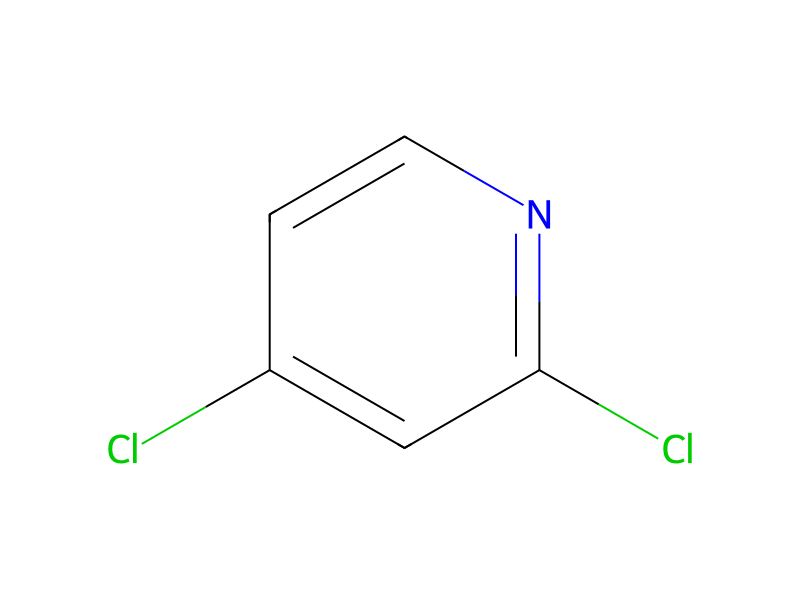

Product 1

Reagents, catalysts & solvents 4




Conditions
- Temperature
- 140 °C
Procedure
Pd2(dba)3 (22.89 mg, 0.025 mmol), 9,9-dimethyl-4,5-bis(diphenylphosphino)xanthene (43.4 mg, 0.075 mmol), 2,4-dichloropyridine (148 mg, 1.00 mmol), cesium carbonate (651 mg, 2.00 mmol),ethyl 2-aminooxazole-4-carboxylate (156 mg, 1.00 mmol) were added to an oven dried microwave vial, the vial was capped and placed under an inert atmosphere, dioxane (4 mL) was added and the resulting mixture was heated to 140 °C for 1 h by microwave irradiation under a nitrogen atmosphere. The crude product was purified by reverse-phase flash chromatography, elution gradient 0 to 100% MeCN in water. Pure fractions were evaporated to dryness to afford ethyl 2-(4-chloropyridin-2-ylamino)oxazole-4-carboxylate (99 mg, 37.0 %) as a pale yellow solid. Conclusion: Yield produced under microwave conditions is essentially identical to overnight reaction with conventional heating. Therefore screening of other aminooxazoles can be carried out under microwave conditions in the interest of time. .
Sources & evidence
- ORD record
- ord-731adccc0a564281bbf0c68982fd70e6
- Source dataset
- 750 AstraZeneca ELN dataset
- Original link
- View source
Reaction notes
Loading…