Water → 5-Chloro-1,2,3,4-tetrahydro-3-methyl-1-(2-methylpropyl)-2,4-dioxo-thieno[2,3-d]pyrimidine-6-carboxaldehyde
Reaction equation

Br[C:2]1[C:10]2[C:9](=[O:11])[N:8]([CH3:12])[C:7](=[O:13])[N:6]([CH2:14][CH:15]([CH3:17])[CH3:16])[C:5]=2[S:4][CH:3]=1.CN(C)[CH:20]=[O:21].O.P(Cl)(Cl)[Cl:25]>>[Cl:25][C:2]1[C:10]2[C:9](=[O:11])[N:8]([CH3:12])[C:7](=[O:13])[N:6]([CH2:14][CH:15]([CH3:17])[CH3:16])[C:5]=2[S:4][C:3]=1[CH:20]=[O:21]Participants


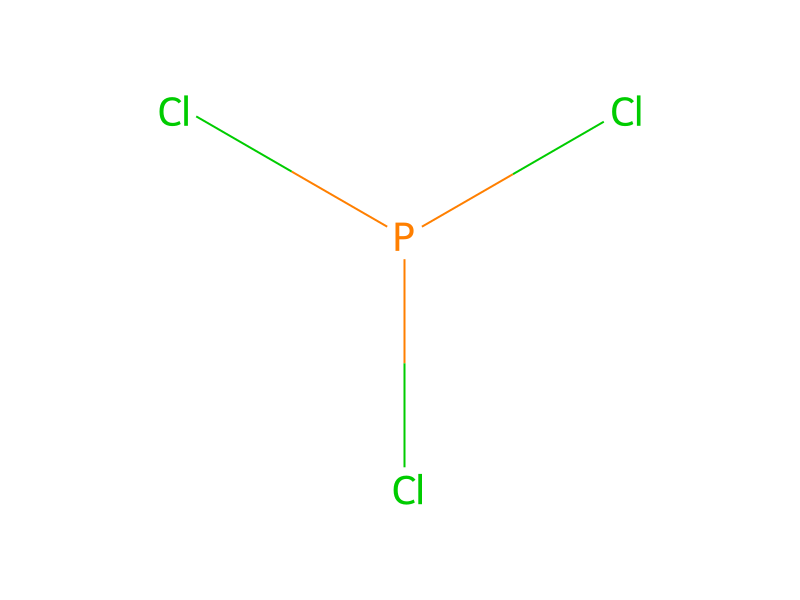


Conditions
- Temperature
- 100 °C
Procedure
To a solution of 5-bromo-3-methyl-1-(2-methylpropyl)-thieno[2,3-d]pyrimidine-2,4(1H,3H)-dione (4.00 g) in phosphorus trichloride (80 ml) was added dimethylformamide (1.5 ml) dropwise with stirring. The solution was heated for 18 hours at 100° C. under nitrogen. Once the solution had cooled to room temperature it was added dropwise to acidified warm water (1 ml of 2M hydrochloric acid in 500 ml of water at 50° C.) and then allowed to cool. The solution was extracted with ethyl acetate (3×200 ml). The organic phase was washed with brine and then dried over magnesium sulfate, filtered and evaporated to leave a dark brown oil. Chromatography, eluting with dichloromethane, gave a solid which was triturated with diethyl ether to give the subtitle compound as a pale yellow solid (1.76 g).
Workup
- temperatureOnce the solution had cooled to room temperature it
- additionwas added dropwise
- temperatureto cool
- extractionThe solution was extracted with ethyl acetate (3×200 ml)
- washThe organic phase was washed with brine
- dry with materialdried over magnesium sulfate
- filtrationfiltered
- customevaporated
- customto leave a dark brown oil
- washChromatography, eluting with dichloromethane
- customgave a solid which
- customwas triturated with diethyl ether
Sources & evidence
- ORD record
- ord-37d1ee0b8e1641529734c2f9fb8b5035
- Source dataset
- uspto-grants-2001_10
- Patent number
- US06300334B1
Reaction notes
Loading…