Morpholine → 2-(3-Bromophenyl)-1-morpholinoethanone
Reaction equation

[NH:1]1[CH2:6][CH2:5][O:4][CH2:3][CH2:2]1.[Br:7][C:8]1[CH:9]=[C:10]([CH2:14][C:15](O)=[O:16])[CH:11]=[CH:12][CH:13]=1>CN(C)C1C=CN=CC=1.ClCCl>[Br:7][C:8]1[CH:9]=[C:10]([CH2:14][C:15]([N:1]2[CH2:6][CH2:5][O:4][CH2:3][CH2:2]2)=[O:16])[CH:11]=[CH:12][CH:13]=1Participants
5
Reactant 2

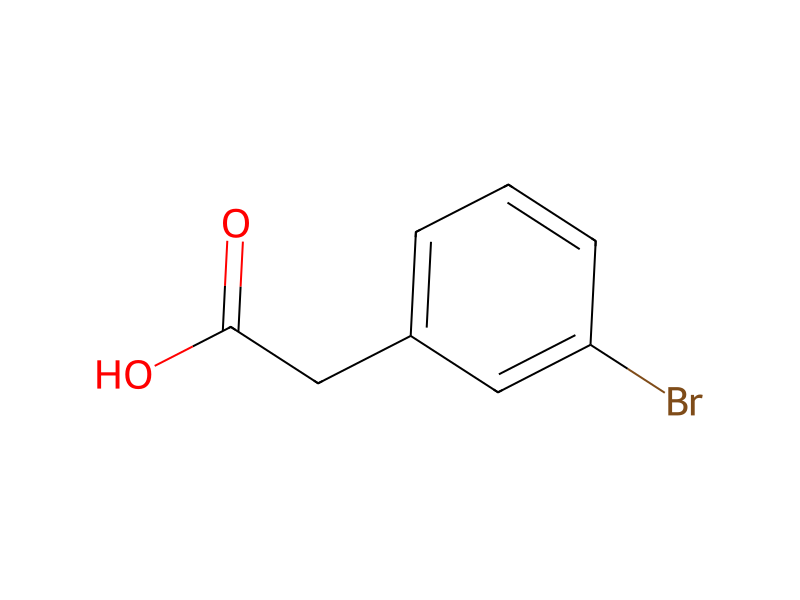
Product 1

Reagents, catalysts & solvents 2


Procedure
Prepared according to the method described in Example 24a) from 1-(3-dimethylaminopropyl)-3-ethylcarbodiimide 4-hydrochloride (0.764 g), 4-dimethylaminopyridine (0.488 g), morpholine (0.35 ml) and a solution of 3-bromophenylacetic acid (0.43 g) in dichloromethane (10 ml). The mixture was stirred overnight at room temperature. The reaction mixture was washed with 2M hydrochloric acid (3×100 ml), the organic layer was dried over anhydrous magnesium sulfate, filtered and concentrated. The sub-title compound was obtained as a solid (0.550 g).
Workup
- customPrepared
- washThe reaction mixture was washed with 2M hydrochloric acid (3×100 ml)
- dry with materialthe organic layer was dried over anhydrous magnesium sulfate
- filtrationfiltered
- concentrationconcentrated
Sources & evidence
- ORD record
- ord-8310112f521b4b359164b63364640f0d
- Source dataset
- uspto-grants-2001_10
- Patent number
- US06300352B1
Reaction notes
Loading…