Potassium Iodide → 9,9-Diethyl-7-iodofluorene-2-carboxaldehyde
Reaction equation

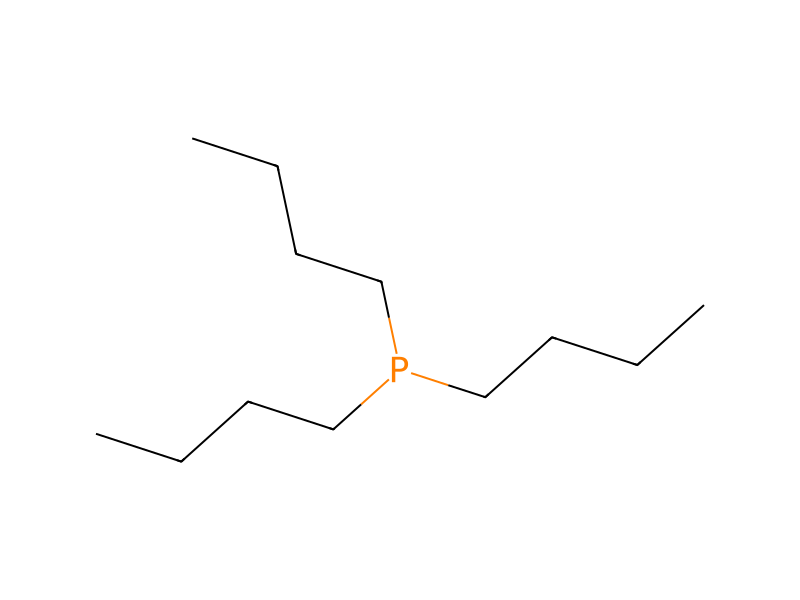
[CH2:1]([C:3]1([CH2:19][CH3:20])[C:15]2[CH:14]=[C:13]([CH:16]=[O:17])[CH:12]=[CH:11][C:10]=2[C:9]2[C:4]1=[CH:5][C:6](Br)=[CH:7][CH:8]=2)[CH3:2].C(P(CCCC)CCCC)CCC.[I-:34].[K+].CN(C=O)C>C1(C)C=CC=CC=1.[Ni](Br)Br>[CH2:1]([C:3]1([CH2:19][CH3:20])[C:15]2[CH:14]=[C:13]([CH:16]=[O:17])[CH:12]=[CH:11][C:10]=2[C:9]2[C:4]1=[CH:5][C:6]([I:34])=[CH:7][CH:8]=2)[CH3:2]Participants
Reactant 4



Product 1

Reagents, catalysts & solvents 2


Procedure
A mixture of 9,9-diethyl-7-bromofluorene-2-carboxaldehyde, (28.8 g., 0.0875 mol.), nickel (II) bromide (2.1 g., 9.6 mmol.), tri-n-butyl phosphine (4m1, 16 mmol.), potassium iodide (52.0 g., 0.3132 mole, 3.6 equivalents), and DMF (125 ml), was held at reflux under an atmosphere of nitrogen for 15 hours, cooled, diluted with toluene (450 ml), and filtered. The filtrate was washed with water in several portions, dried, and concentrated. The residual solids were recrystallized from toluene-heptane (1:2, 150 ml); 24.79 g., m.p. 138-140° C., (75% yield). When the reaction was run longer, 24 and 34 hours, the yields fell to 61 and 59% respectively. Mass Spec (m/z): 376 (M+), not contaminated with the bromo aldehyde. Anal.Calcd. for C18H17Ol: C, 57.46; H, 4.55; and l, 33.73%. Found: C, 58.04 and 58.02; H, 4.72 and 4.66; and l, 32.62 and 32.89.
Workup
- temperatureat reflux under an atmosphere of nitrogen for 15 hours
- temperaturecooled
- filtrationfiltered
- washThe filtrate was washed with water in several portions
- customdried
- concentrationconcentrated
- customThe residual solids were recrystallized from toluene-heptane (1:2, 150 ml)
- custom24 and 34 hours
Sources & evidence
- ORD record
- ord-3d180c16ac664feaa26e72325d6d731b
- Source dataset
- uspto-grants-2001_10
- Patent number
- US06300502B1
Reaction notes
Loading…