2-Bromonaphthalene → (Naphthalen-2-yl)boronic acid
Reaction equation

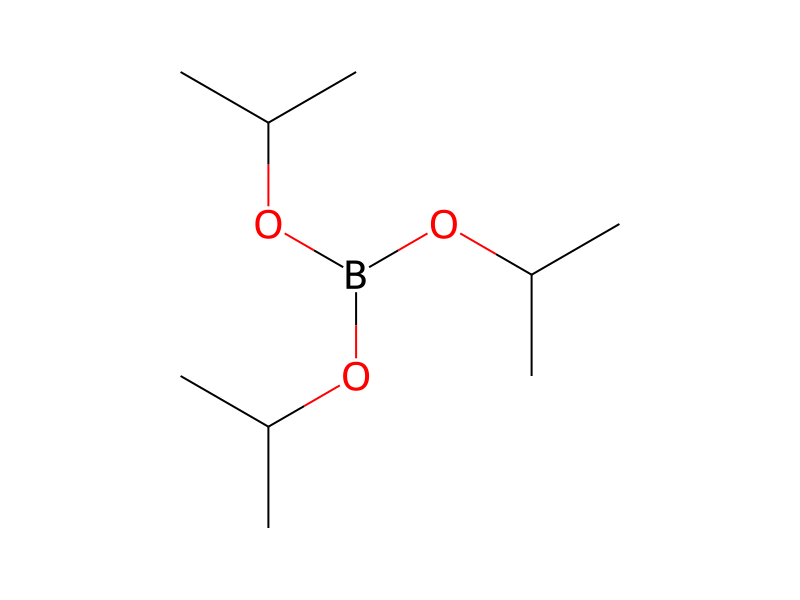
Br[C:2]1[CH:11]=[CH:10][C:9]2[C:4](=[CH:5][CH:6]=[CH:7][CH:8]=2)[CH:3]=1.C([Li])CCC.C([O:20][B:21](OC(C)C)[O:22]C(C)C)(C)C>O1CCCC1>[CH:3]1[C:4]2[C:9](=[CH:8][CH:7]=[CH:6][CH:5]=2)[CH:10]=[CH:11][C:2]=1[B:21]([OH:22])[OH:20]Participants
Reactant 3


Product 1

Reagents, catalysts & solvents 1

Procedure
A solution of 15 gm (63.3 mMol) 2-bromonaphthalene in 100 mL tetrahydrofuran was cooled to −78° C. and then 47.4 mL (75.9 mMol) n-butyllithium (1.6 M in hexane) were added. After stirring for about 1.5 hours, a solution of 19 mL (82.2 mMol) triisopropylborate in 30 mL tetrahydrofuran was added via addition funnel. The reaction mixture was allowed to warm to room temperature and was stirred for about 18 hours. The reaction mixture was then partitioned between ethyl acetate and 2 N hydrochloric acid. The phases were separated and the organic phase washed with saturated aqueous sodium chloride, dried over sodium sulfate and concentrated under reduced pressure. The residual solid was suspended in hexanes and the mixture subjected to sonication. The suspension was then filtered to provide 8.3 gm (76%) of the title compound as a white solid.
Workup
- stirringwas stirred for about 18 hours
- customThe reaction mixture was then partitioned between ethyl acetate and 2 N hydrochloric acid
- customThe phases were separated
- washthe organic phase washed with saturated aqueous sodium chloride
- dry with materialdried over sodium sulfate
- concentrationconcentrated under reduced pressure
- customthe mixture subjected to sonication
- filtrationThe suspension was then filtered
Sources & evidence
- ORD record
- ord-2ae6a3202ccf4f76ab39cd1f876062b8
- Source dataset
- uspto-grants-2001_10
- Patent number
- US06303627B1
Reaction notes
Loading…