Cesium carbonate → [5-(Furan-2-yl)pyridin-3-yl]methanol
Reaction equation

Br[C:2]1[CH:3]=[C:4]([CH2:8][OH:9])[CH:5]=[N:6][CH:7]=1.[O:10]1[CH:14]=[CH:13][CH:12]=[C:11]1B(O)O.[Cl-].[Li+].C(=O)([O-])[O-].[Cs+].[Cs+].C1(P(C2CCCCC2)C2C=CC=CC=2C2C(OC)=CC=CC=2OC)CCCCC1>O1CCOCC1.C([O-])(=O)C.[Pd+2].C([O-])(=O)C>[O:10]1[CH:14]=[CH:13][CH:12]=[C:11]1[C:2]1[CH:3]=[C:4]([CH2:8][OH:9])[CH:5]=[N:6][CH:7]=1Participants
8
Reactant 5




Product 1

Reagents, catalysts & solvents 2


Procedure
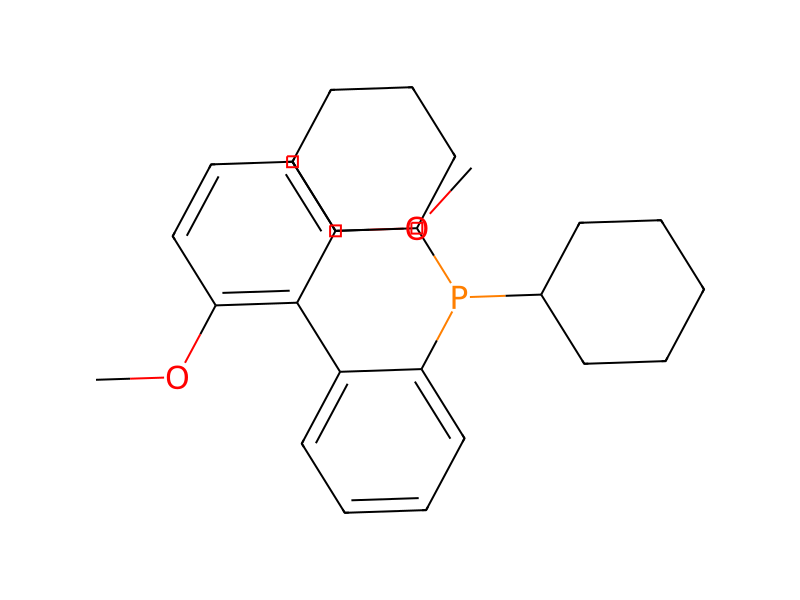
To a solution of 0.10 g of (5-bromopyridin-3-yl)methanol in 5 mL of dioxane, 72 mg of 2-furanboronic acid, 67 mg of lithium chloride, 0.51 g of cesium carbonate, 5.4 mg of palladium acetate and 20 mg of 2-dicyclohexylphosphino-2′,6′-dimethoxybiphenyl were added at room temperature, and the mixture was heated under reflux for 1 hour 30 minutes under a nitrogen atmosphere. The reaction mixture was cooled to room temperature, and the solvent was then distilled off under reduced pressure. The resultant residue was purified by flash silica gel column chromatography using gradient elution with chloroform:methanol=95:5 to 90:10 to obtain 39 mg of (5-(2-furyl)pyridin-3-yl)methanol as a yellow oily substance.
Workup
- temperaturethe mixture was heated
- temperatureunder reflux for 1 hour 30 minutes under a nitrogen atmosphere
- distillationthe solvent was then distilled off under reduced pressure
- customThe resultant residue was purified by flash silica gel column chromatography
- washelution with chloroform
Sources & evidence
- ORD record
- ord-399de85177a64d5d9c02a3609fd8c7eb
- Source dataset
- uspto-grants-2013_02
- Patent number
- US08367831B2
Reaction notes
Loading…