Hydrochloric Acid → HCID 25206610, compound
Reaction equation

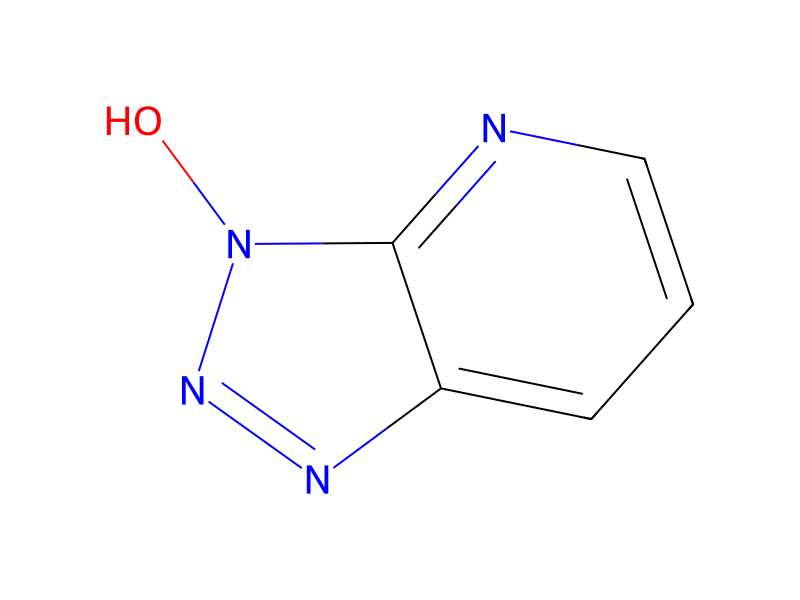
[O:1]1[CH:5]=[CH:4][N:3]=[C:2]1[C:6]1[CH:7]=[C:8]([C:24](O)=[O:25])[C:9]2[CH2:10][CH2:11][N:12]([CH:17]([CH2:21][CH2:22][CH3:23])[CH2:18][CH2:19][CH3:20])[C:13](=[O:16])[C:14]=2[CH:15]=1.[ClH:27].[NH2:28][C@@H:29]([CH2:47][C:48]1[CH:53]=[C:52]([F:54])[CH:51]=[C:50]([F:55])[CH:49]=1)[C@H:30]([OH:46])[CH2:31][NH:32][C:33]1([C:36]2[CH:41]=[CH:40][CH:39]=[C:38]([C:42]([F:45])([F:44])[F:43])[CH:37]=2)[CH2:35][CH2:34]1.ON1C2N=CC=CC=2N=N1.Cl.CN(C)CCCN=C=NCC.Cl>CN(C)C=O.C(OCC)C.O1CCOCC1.C(OCC)(=O)C.O.C(N(CC)CC)C>[ClH:27].[F:54][C:52]1[CH:53]=[C:48]([CH:49]=[C:50]([F:55])[CH:51]=1)[CH2:47][C@H:29]([NH:28][C:24]([C:8]1[C:9]2[CH2:10][CH2:11][N:12]([CH:17]([CH2:18][CH2:19][CH3:20])[CH2:21][CH2:22][CH3:23])[C:13](=[O:16])[C:14]=2[CH:15]=[C:6]([C:2]2[O:1][CH:5]=[CH:4][N:3]=2)[CH:7]=1)=[O:25])[C@H:30]([OH:46])[CH2:31][NH:32][C:33]1([C:36]2[CH:41]=[CH:40][CH:39]=[C:38]([C:42]([F:45])([F:43])[F:44])[CH:37]=2)[CH2:35][CH2:34]1Participants
Reactant 5



Product 1

Reagents, catalysts & solvents 6






Procedure
Added to a solution of 150 mg of 7-(2-oxazolyl)-1-oxo-2-(1-propylbutyl)-1,2,3,4-tetrahydroisoquinoline-5-carboxylic acid in 4 cm3 of anhydrous dimethylformamide and under an argon atmosphere are 0.19 cm3 of triethylamine and 201 mg of (2R,3S)-3-amino-4-(3,5-difluorophenyl)-1-({1-[3-(trifluoromethyl)phenyl]cyclopropyl}amino)butan-2-ol hydrochloride then 69 mg of 1-hydroxy-7-azabenzotriazole and 97 mg of 1-(3-dimethylaminopropyl)-3-ethylcarbodiimide hydrochloride. The solution is kept stirring for 15 h at a temperature close to 20° C. 50 cm3 of water and 50 cm3 of ethyl acetate are added to the reaction medium. After decanting, the organic phase is washed with 50 cm3 of a saturated aqueous solution of ammonium chloride, two lots of 20 cm3 of water and 20 cm3 of a saturated aqueous solution of sodium chloride, dried over anhydrous magnesium sulfate, filtered and concentrated to dryness under reduced pressure (5 kPa). The residual solution (around 3 cm3) is filtered through a pellet of 15 g of 40-63 μm silica. The silica pellet is washed with 40 cm3 of ethyl acetate. The filtrate is concentrated to dryness under reduced pressure (5 kPa). 255 mg is obtained of a white powder which is dissolved in 10 cm3 of ethyl ether. Added thereto, while stirring, is 0.2 cm3 of a 4N solution of hydrochloric acid in dioxane at a temperature of 20° C. The reaction mixture precipitates. The precipitate is filtered, washed with two lots of 5 cm3 of isopropyl ether and dried under vacuum at a temperature of 35° C. 236 mg of N-[(1S,2R)-1-(3,5-difluorobenzyl)-2-hydroxy-3-({1-[3-(trifluoromethyl)phenyl]cyclopropyl}amino)propyl]-7-(2-oxazolyl)-1-oxo-2-(1-propylbutyl)-1,2,3,4-tetrahydroisoquinoline-5-carboxamide hydrochloride are obtained in the form of white crystals.
Workup
- customclose to 20° C
- customAfter decanting
- washthe organic phase is washed with 50 cm3 of a saturated aqueous solution of ammonium chloride, two lots of 20 cm3 of water and 20 cm3 of a saturated aqueous solution of sodium chloride
- dry with materialdried over anhydrous magnesium sulfate
- filtrationfiltered
- concentrationconcentrated to dryness under reduced pressure (5 kPa)
- filtrationThe residual solution (around 3 cm3) is filtered through a pellet of 15 g of 40-63 μm silica
- washThe silica pellet is washed with 40 cm3 of ethyl acetate
- concentrationThe filtrate is concentrated to dryness under reduced pressure (5 kPa)
- custom255 mg is obtained of a white powder which
- additionAdded
- stirringwhile stirring
- customat a temperature of 20° C
- customThe reaction mixture precipitates
- filtrationThe precipitate is filtered
- washwashed with two lots of 5 cm3 of isopropyl ether
- customdried under vacuum at a temperature of 35° C
Sources & evidence
- ORD record
- ord-30d4b5331b524a0f89e27d293688cc42
- Source dataset
- uspto-grants-2013_02
- Patent number
- US08372864B2
Reaction notes
Loading…