Benzenesulfonyl chloride → 6-Bromo-1-(phenylsulfonyl)-1H-indazole-4-carbonitrile
Reaction equation

[Br:1][C:2]1[CH:3]=[C:4]([C:11]#[N:12])[C:5]2[CH:6]=[N:7][NH:8][C:9]=2[CH:10]=1.[H-].[Na+].[C:15]1([S:21](Cl)(=[O:23])=[O:22])[CH:20]=[CH:19][CH:18]=[CH:17][CH:16]=1>CN(C)C=O>[Br:1][C:2]1[CH:3]=[C:4]([C:11]#[N:12])[C:5]2[CH:6]=[N:7][N:8]([S:21]([C:15]3[CH:20]=[CH:19][CH:18]=[CH:17][CH:16]=3)(=[O:23])=[O:22])[C:9]=2[CH:10]=1Participants
5
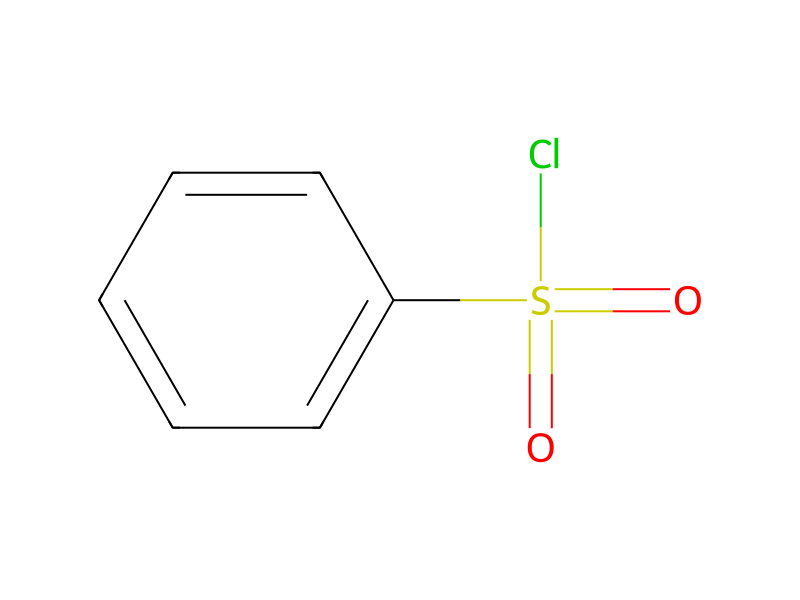




Conditions
- Temperature
- 20 °C
Procedure
To a solution of 6-bromo-1H-indazole-4-carbonitrile (5 g, 22.52 mmol) in N,N-dimethylformamide (50 ml) was added, in portions, sodium hydride (1.351 g, 33.8 mmol) and the mixture stirred at 20° C. for 15 mins then cooled to 0° C. when benzenesulfonyl chloride (3.16 ml, 24.77 mmol) was added dropwise. The mixture was stirred at 20° C. for 18 h then concentrated in vacuo and the residue partitioned between water (100 ml) and dichloromethane (100 ml). The organic layer was separated by hydrophobic frit and evaporated in vacuo to give the title compound as a yellow solid (7.94 g).
Workup
- additionwas added dropwise
- stirringThe mixture was stirred at 20° C. for 18 h
- concentrationthen concentrated in vacuo
- customthe residue partitioned between water (100 ml) and dichloromethane (100 ml)
- customThe organic layer was separated by hydrophobic frit
- customevaporated in vacuo
Sources & evidence
- ORD record
- ord-0a9c05e5ef1e43e8ac235bb79c926a4b
- Source dataset
- uspto-grants-2013_09
- Patent number
- US08524751B2
Reaction notes
Loading…