Ethyl Acetate → 6-Fluoro-3,4-dihydro-3-oxo-2-pyrazinecarbonitrile
Reaction equation

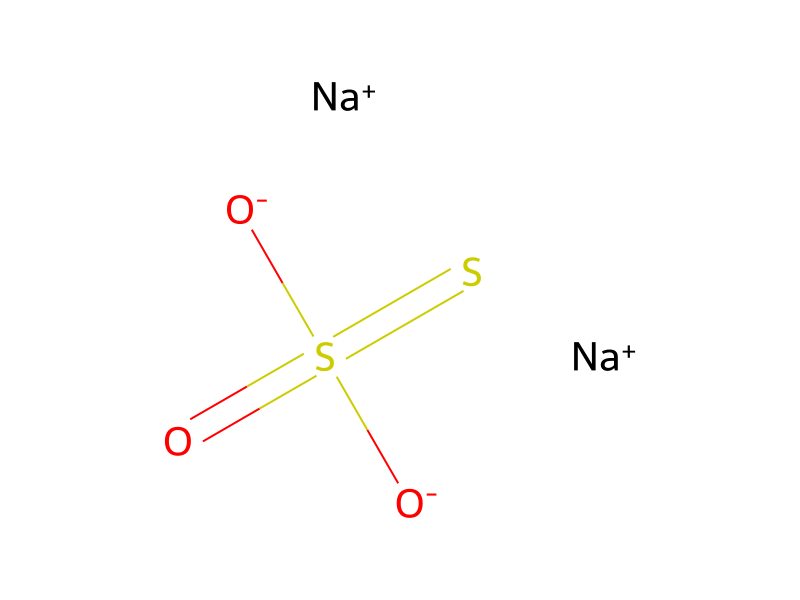
[F:1][C:2]1[N:7]=[C:6]([C:8]#[N:9])[C:5]([O:10]C2C=CC(O)=CC=2)=[N:4][CH:3]=1.[N+]([O-])([O-])=O.[Ce+3].[NH4+].[NH4+].[N+]([O-])([O-])=O.[N+]([O-])([O-])=O.[N+]([O-])([O-])=O.[N+]([O-])([O-])=O.C(OCC)(=O)C.S([O-])([O-])(=O)=S.[Na+].[Na+]>C(#N)C.O>[F:1][C:2]1[N:7]=[C:6]([C:8]#[N:9])[C:5](=[O:10])[NH:4][CH:3]=1Participants
Reactant 4



Product 1

Reagents, catalysts & solvents 2


Procedure
In a mixture of 7.5 mL of acetonitrile and 3 mL of water was dissolved 0.45 g of 6-fluoro-3-(4-hydroxyphenoxy)-2-pyrazinecarbonitrile. Then, 1.17 g of diammonium cerium nitrate was added at room temperature, and stirred at the same temperature as above for 15 minutes. A mixture of 10 mL of ethyl acetate and 5 ml of 5% aqueous solution of sodium thiosulfate was added to the reaction mixture, and the organic layer was separated. The organic layer thus obtained was washed with saturated aqueous solution of sodium chloride, treated with active charcoal and dried on anhydrous magnesium sulfate, and then the solvent was removed under reduced pressure. Thus, 6-fluoro-3-oxo-3,4-dihydro-2-pyrazinecarbonitrile was obtained as a yellow-colored solid product.
Workup
- additionwas added to the reaction mixture
- customthe organic layer was separated
- customThe organic layer thus obtained
- washwas washed with saturated aqueous solution of sodium chloride
- additiontreated with active charcoal
- dry with materialdried on anhydrous magnesium sulfate
- customthe solvent was removed under reduced pressure
Sources & evidence
- ORD record
- ord-6ee4e05a20e04d2388aa1e993b81a563
- Source dataset
- uspto-grants-2004_10
- Patent number
- US06800629B2
Reaction notes
Loading…