Sodium hydride → 4-Cyano-3-(3-morpholinopropoxy)aniline
Reaction equation

[H-].[Na+].[OH:3][CH2:4][CH2:5][CH2:6][N:7]1[CH2:12][CH2:11][O:10][CH2:9][CH2:8]1.Cl[C:14]1[CH:15]=[C:16]([CH:18]=[CH:19][C:20]=1[C:21]#[N:22])[NH2:17]>CN1C(=O)CCC1>[C:21]([C:20]1[CH:19]=[CH:18][C:16]([NH2:17])=[CH:15][C:14]=1[O:3][CH2:4][CH2:5][CH2:6][N:7]1[CH2:12][CH2:11][O:10][CH2:9][CH2:8]1)#[N:22]Participants
5
Reactant 3

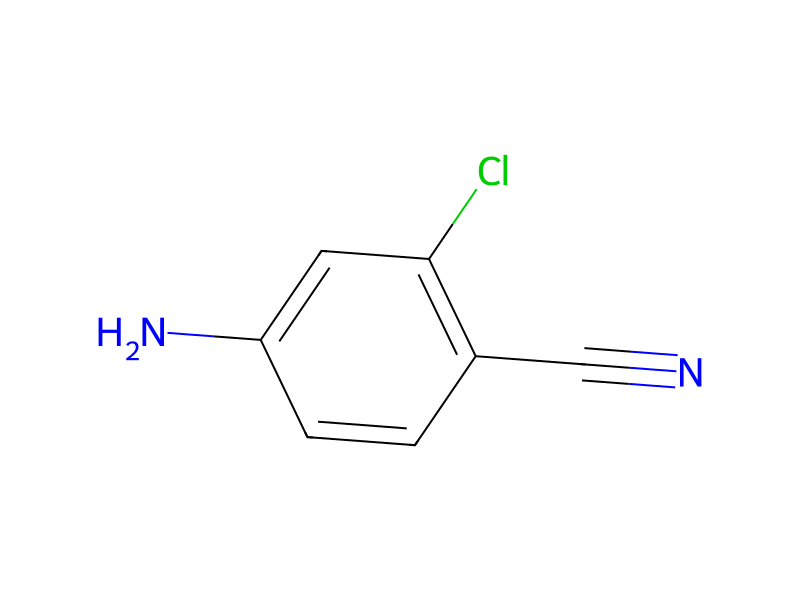

Product 1

Reagents, catalysts & solvents 1

Conditions
- Temperature
- 145 °C
Procedure
Sodium hydride (2.0 g of an 85% dispersion in mineral oil, 60 mmol) was added to 4-(3-hydroxypropyl)morpholine (4.8 g, 30 mmol), (Tet. Lett. 1994, 35, 1715), in NMP (50 ml) and the mixture was stirred for 15 minutes. 3-Chloro-4-cyanoaniline (4.8 g, 30 mmol) was added and the mixture was heated at 145° C. for 6 hours. The mixture was allowed to cool and was partitioned between ethyl acetate and water. The organic layer was separated, washed with water and then brine and dried (MgSO4). The solvent was removed by evaporation and the residue was purified by column chromatography eluting with ethyl acetate and then methylene chloride/methanol (9/1) to give 4-cyano-3-(3-morpholinopropoxy)aniline (2.0 g, 26%) as a yellow gum.
Workup
- temperatureto cool
- customwas partitioned between ethyl acetate and water
- customThe organic layer was separated
- washwashed with water
- dry with materialbrine and dried (MgSO4)
- customThe solvent was removed by evaporation
- customthe residue was purified by column chromatography
- washeluting with ethyl acetate
Sources & evidence
- ORD record
- ord-2e4886f4ee0e4197b28e11cf290a84e0
- Source dataset
- uspto-grants-2004_10
- Patent number
- US06809097B1
Reaction notes
Loading…