Potassium Carbonate → HCID 203693, compound
Reaction equation

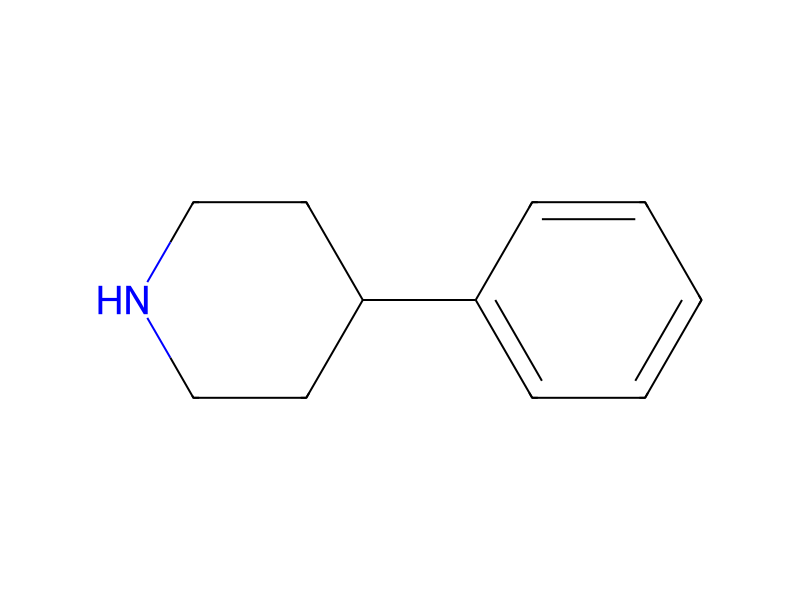
[C:1]1([CH:7]2[CH2:12][CH2:11][NH:10][CH2:9][CH2:8]2)[CH:6]=[CH:5][CH:4]=[CH:3][CH:2]=1.Br[CH2:14][CH2:15][CH2:16][OH:17].C(=O)([O-])[O-].[K+].[K+]>C(O)CCC.O1CCOCC1.[I-].[K+]>[OH:17][CH2:16][CH2:15][CH2:14][N:10]1[CH2:9][CH2:8][CH:7]([C:1]2[CH:6]=[CH:5][CH:4]=[CH:3][CH:2]=2)[CH2:12][CH2:11]1Participants
7






Procedure
A suspension of 4-phenylpiperidine (3.00 g, 18.6 mmol, 1.00 equiv), 3-bromopropan-1-ol (2.12 mL, 22.3 mmol, 1.20 equiv), potassium carbonate (12.8 g, 93.0 mmol, 5.00 equiv), and potassium iodide (124 mg, 0.74 mmol, 0.04 equiv) in n-butanol (50 mL) and 1,4-dioxane (50 mL) was stirred at reflux under argon for 48 hours. The mixture was cooled to room temperature and concentrated. Water (50 mL) was added and the mixture was extracted with CH2Cl2 (4×100 mL). The combined organic solutions were dried over MgSo4 and concentrated. The residue was crystallized from ethyl acetate to give 3.36 g (82%) of tan solid, which was characterized spectroscopically.
Workup
- temperatureat reflux under argon for 48 hours
- concentrationconcentrated
- additionWater (50 mL) was added
- extractionthe mixture was extracted with CH2Cl2 (4×100 mL)
- customThe combined organic solutions were dried over MgSo4
- concentrationconcentrated
- customThe residue was crystallized from ethyl acetate
Sources & evidence
- ORD record
- ord-7a39f3a5a176470fbb395e559c61eba9
- Source dataset
- uspto-grants-2003_08
- Patent number
- US06608086B2
Reaction notes
Loading…