Sodium Bisulfate → 2-Chloro-3-(trifluoromethyl)benzyl alcohol
Reaction equation

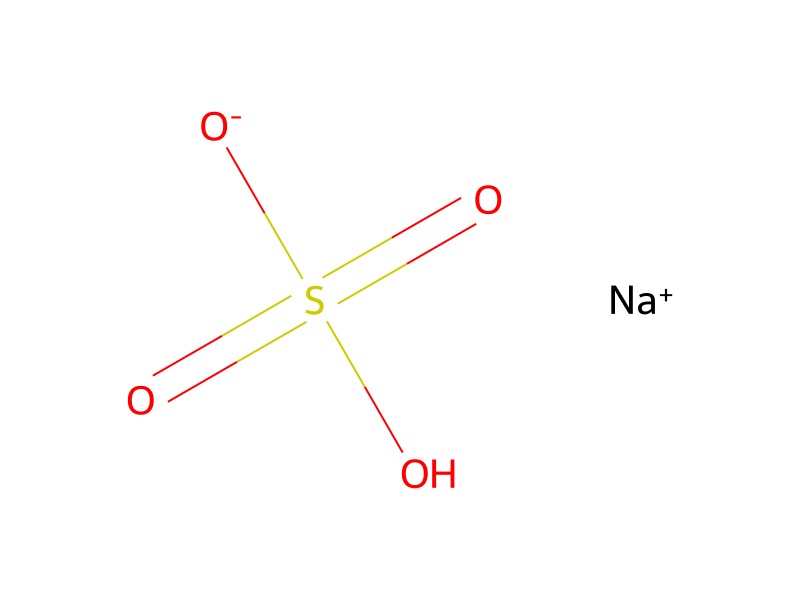
[BH4-].[Na+].[Cl:3][C:4]1[C:11]([C:12]([F:15])([F:14])[F:13])=[CH:10][CH:9]=[CH:8][C:5]=1[CH:6]=[O:7].S([O-])(O)(=O)=O.[Na+]>C(Cl)Cl.CC(O)C.O>[Cl:3][C:4]1[C:11]([C:12]([F:14])([F:15])[F:13])=[CH:10][CH:9]=[CH:8][C:5]=1[CH2:6][OH:7]Participants
Reactant 3


Product 1

Reagents, catalysts & solvents 3



Procedure
Sodium borohydride (2.54 g, 67.1 mmol) was added to a solution of 2-chloro-3-(trifluoromethyl)benzaldehyde (purchased at Interchim, cat. # 21117, 10.0 g, 47.9 mmol) in a mixture of DCM (40 ml) and 2-propanol (20 ml), while the mixture was cooled with a water bath. The reaction mixture was stirred for 16 hours at room temperature. At 0° C., a 10% aqueous solution of sodium hydrogensulphate (20 ml) was added dropwise. The reaction mixture was diluted with DCM (100 ml) and water (100 ml). The phases were separated. The organic layer was washed with a saturated aqueous solution of sodium hydrogencarbonate (100 ml) and dried over magnesium sulphate. The solvent was removed in vacuo to give 9.37 g of crude (2-chloro-3-(trifluoromethyl)phenyl)methanol, which was used for the next step without further purification.
Workup
- temperaturewas cooled with a water bath
- customThe phases were separated
- washThe organic layer was washed with a saturated aqueous solution of sodium hydrogencarbonate (100 ml)
- dry with materialdried over magnesium sulphate
- customThe solvent was removed in vacuo
Sources & evidence
- ORD record
- ord-3eca8dfac2d24514a271c24ebfa8e05f
- Source dataset
- uspto-grants-2003_08
- Patent number
- US06610721B2
Reaction notes
Loading…