Hydrochloric Acid → 4-[(2-Butyl-4-quinolinyl)-amino]benzoic acid hydrochloride
Reaction equation

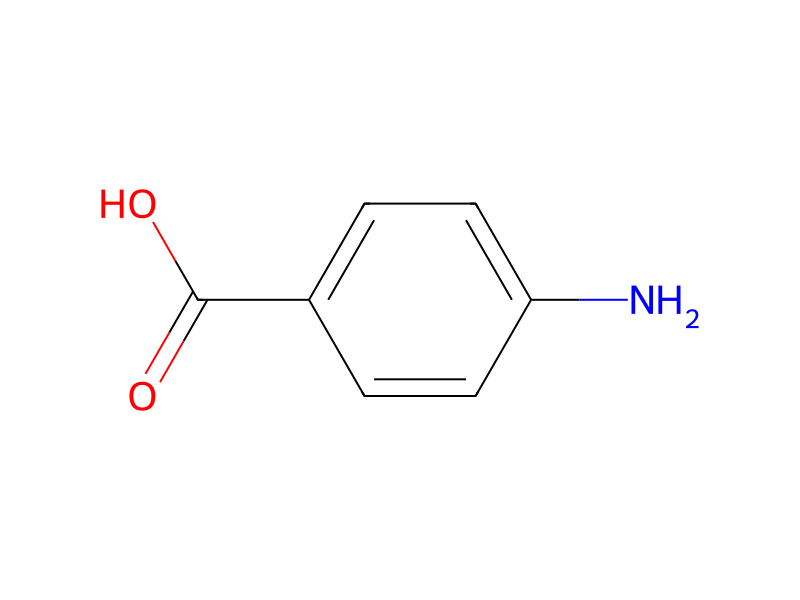
[Cl:1][C:2]1[C:11]2[C:6](=[CH:7][CH:8]=[CH:9][CH:10]=2)[N:5]=[C:4]([CH2:12][CH2:13][CH2:14][CH3:15])[CH:3]=1.[CH:16]1[C:21]([C:22]([OH:24])=[O:23])=[CH:20][CH:19]=[C:18]([NH2:25])[CH:17]=1.Cl>>[ClH:1].[CH2:12]([C:4]1[CH:3]=[C:2]([NH:25][C:18]2[CH:19]=[CH:20][C:21]([C:22]([OH:24])=[O:23])=[CH:16][CH:17]=2)[C:11]2[C:6](=[CH:7][CH:8]=[CH:9][CH:10]=2)[N:5]=1)[CH2:13][CH2:14][CH3:15]Participants
4



Procedure
0.840 g of the product of Step D of Example 3 and 0.640 g of amino benzoic acid were introduced into 15 ml of 1N hydrochloric acid and the solution was refluxed for 3 hours. The precipitate was filtered, washed with water and dried at 60° C. under reduced pressure to obtain 0.830 g of the expected product.
Workup
- temperaturethe solution was refluxed for 3 hours
- filtrationThe precipitate was filtered
- washwashed with water
- customdried at 60° C. under reduced pressure
Sources & evidence
- ORD record
- ord-29533e97c15246aea3382b863fc614c2
- Source dataset
- uspto-grants-1998_10
- Patent number
- US05817674
Reaction notes
Loading…