Trichloroisocyanuric Acid → 4-Nitrobenzaldehyde
Reaction equation

[N+:1]([C:4]1[CH:11]=[CH:10][C:7]([CH2:8][OH:9])=[CH:6][CH:5]=1)([O-:3])=[O:2].C([O-])(=O)C.[Na+].ClN1C(=O)N(Cl)C(=O)N(Cl)C1=O>C(Cl)Cl.CC(C)=O.CC1(C)N([O])C(C)(C)CCC1>[N+:1]([C:4]1[CH:5]=[CH:6][C:7]([CH:8]=[O:9])=[CH:10][CH:11]=1)([O-:3])=[O:2]Participants
Reactant 3


Product 1

Reagents, catalysts & solvents 3


Procedure
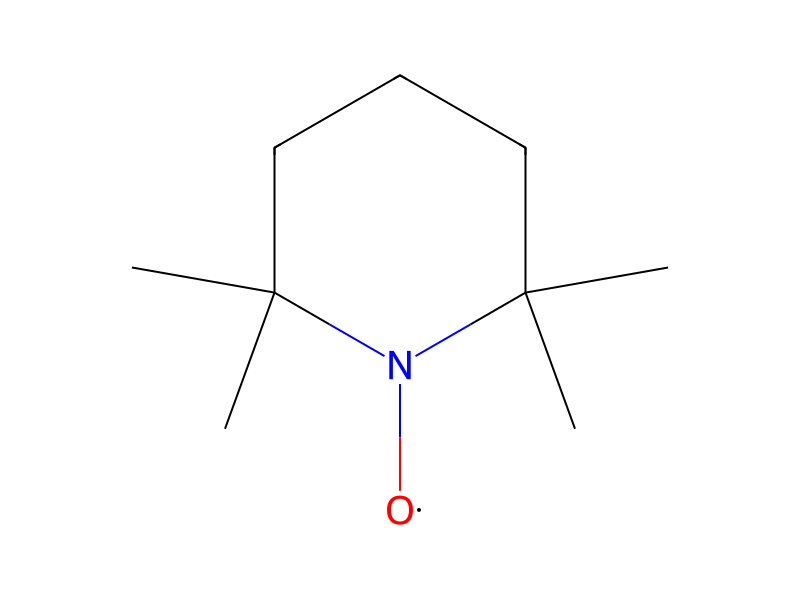
5 g (32.6 mmol) of 4-nitrobenzylalcohol, 2.7 g (32.9 mmol) of sodium acetate and 10 mg (0.06 mmol) of TEMPO were suspended in 40 ml of methylene chloride in a 100 ml sulphonation flask and the suspension was cooled to (-8)-(-10)° C. while stirring. A solution of 3.03 g (13.0 mmol) of trichloroisocyanuric acid in 20 ml of acetone was dosed in within 1 hour, whereupon the mixture was held at (-5)° C. for 1 hour. Thereafter, the reaction had finished. The white precipitate was filtered off and the filtrate was washed with sodium bicarbonate solution and with sodium chloride solution. The organic phase was concentrated and the residue was recrystallized from diisopropyl ether. There were obtained 4.62 g (94%) of 4-nitrobenzaldehyde, GC content: (97.7%) (area percent).
Workup
- temperaturethe suspension was cooled to (-8)-(-10)° C
- customwas dosed in within 1 hour, whereupon the mixture
- filtrationThe white precipitate was filtered off
- washthe filtrate was washed with sodium bicarbonate solution and with sodium chloride solution
- concentrationThe organic phase was concentrated
- customthe residue was recrystallized from diisopropyl ether
Sources & evidence
- ORD record
- ord-8f22759a0748474c8c8827a6df383c7f
- Source dataset
- uspto-grants-1998_10
- Patent number
- US05821374
Reaction notes
Loading…