Water → 1-(1-Fluorocyclopropyl)-3-(5-fluoro-2-methoxyphenyl)-3-methylbutan-1-ol
Reaction equation

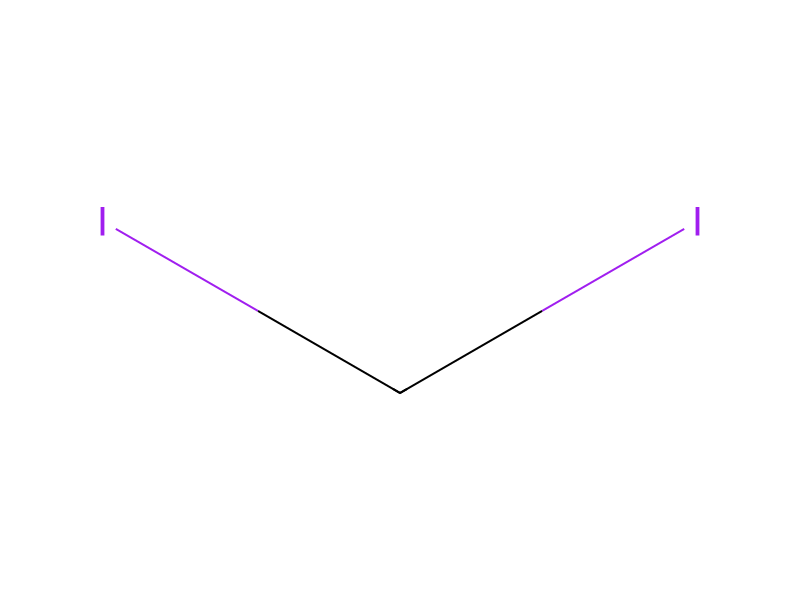
[F:1][C:2]([CH:4]([OH:18])[CH2:5][C:6]([C:9]1[CH:14]=[C:13]([F:15])[CH:12]=[CH:11][C:10]=1[O:16][CH3:17])([CH3:8])[CH3:7])=[CH2:3].[CH2:19]([Zn]CC)C.ICI.O>C(OCC)(=O)C>[F:1][C:2]1([CH:4]([OH:18])[CH2:5][C:6]([C:9]2[CH:14]=[C:13]([F:15])[CH:12]=[CH:11][C:10]=2[O:16][CH3:17])([CH3:8])[CH3:7])[CH2:19][CH2:3]1Participants
Reactant 4



Product 1

Reagents, catalysts & solvents 1

Procedure
To 2-fluoro-5-(5-fluoro-2-methoxyphenyl)-5-methylhex-1-en-3-ol, stirred under nitrogen gas and cooled on ice, was added 8.0 mL of diethyl zinc (1.1 M in toluene). After 5 minutes, 1.0 mL of diiodomethane was added dropwise over 20 minutes, and the mixture was stirred and allowed to come to room temperature and then stirred at room temperature for 2 days. Then 0.5 mL of water was added, followed by ethyl acetate, and the mixture was filtered through diatomaceous earth. The product was concentrated in vacuo and the residue was fractionated over silica gel (hexanes-dichloromethane (1:1) to dichloromethane, gradient) to give 0.8 g of 1-(1-fluorocyclopropyl)-3-(5-fluoro-2-methoxyphenyl)-3-methylbutan-1-ol as an oil which was used without additional purification.
Workup
- temperaturecooled on ice
- customto come to room temperature
- stirringstirred at room temperature for 2 days
- filtrationthe mixture was filtered through diatomaceous earth
- concentrationThe product was concentrated in vacuo
Sources & evidence
- ORD record
- ord-a38a94b49db64afab6715a1ae93563cd
- Source dataset
- uspto-grants-2014_06
- Patent number
- US08741897B2
Reaction notes
Loading…