Hydrogen Bromide → 3,4-Dihydroxy-5-nitrobenzaldehyde
Reaction equation

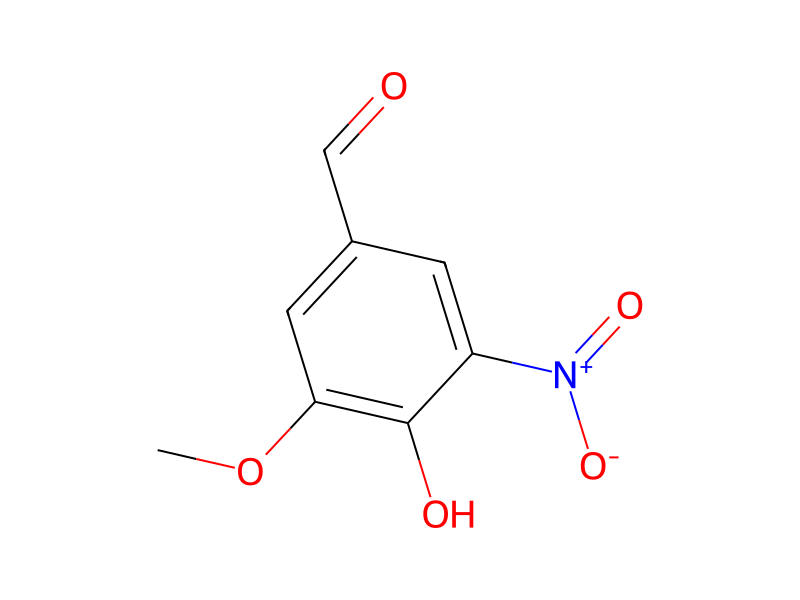
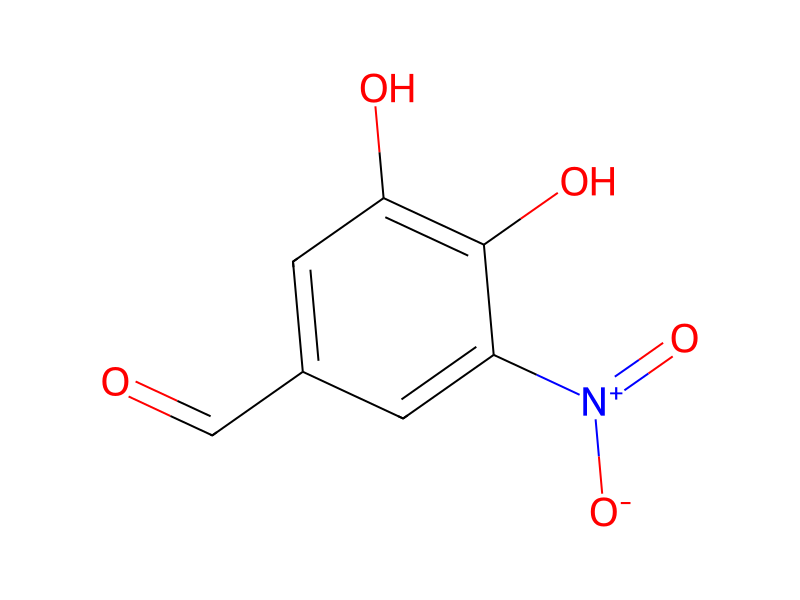
[OH:1][C:2]1[C:9]([N+:10]([O-:12])=[O:11])=[CH:8][C:5]([CH:6]=[O:7])=[CH:4][C:3]=1[O:13]C.Br.CCOC(C)=O>C(O)(=O)C>[OH:13][C:3]1[CH:4]=[C:5]([CH:8]=[C:9]([N+:10]([O-:12])=[O:11])[C:2]=1[OH:1])[CH:6]=[O:7]Participants
5
Reactant 3


Product 1
Reagents, catalysts & solvents 1

Conditions
- Temperature
- 90 °C
Procedure
To a solution of 4-hydroxy-3-methoxy-5-nitrobenzaldehyde (3 g, 15.2 mmol) in acetic acid (3.1 mL) was added 40% hydrobromic acid (9.24 mL). The mixture was heated at 90° C. for 17 h. Reaction mixture was cooled and poured into ice water (100 mL), followed by a standard aqueous/EtOAc workup and purified by column chromatography on silica gel (petroleum ether/ethyl acetate=5:1) to give 3,4-dihydroxy-5-nitrobenzaldehyde (1.1 g, yield 39.5%).
Workup
- customReaction mixture
- temperaturewas cooled
- custompurified by column chromatography on silica gel (petroleum ether/ethyl acetate=5:1)
Sources & evidence
- ORD record
- ord-ab9d9128a9cc4199909d37165f9c7acf
- Source dataset
- uspto-grants-2014_06
- Patent number
- US08741915B2
Reaction notes
Loading…