Trifluoroacetic acid → 2,2-Difluoro-2-(3-methoxyquinolin-6-yl)acetic acid
Reaction equation

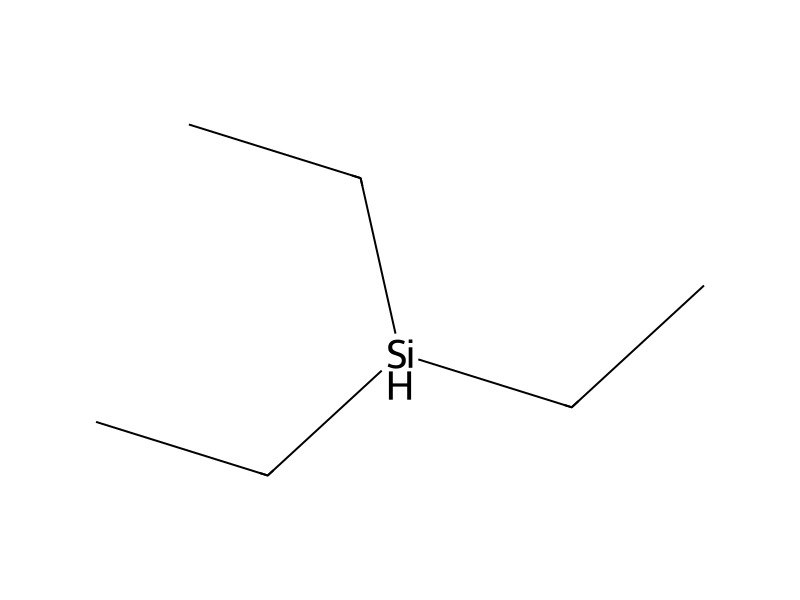
[F:1][C:2]([F:22])([C:10]1[CH:11]=[C:12]2[C:17](=[CH:18][CH:19]=1)[N:16]=[CH:15][C:14]([O:20][CH3:21])=[CH:13]2)[C:3]([O:5]C(C)(C)C)=[O:4].FC(F)(F)C(O)=O.C([SiH](CC)CC)C>C(Cl)Cl>[F:22][C:2]([F:1])([C:10]1[CH:11]=[C:12]2[C:17](=[CH:18][CH:19]=1)[N:16]=[CH:15][C:14]([O:20][CH3:21])=[CH:13]2)[C:3]([OH:5])=[O:4]Participants
5
Reactant 3


Product 1

Reagents, catalysts & solvents 1

Procedure
A 200 mL round bottom flask was charged with tert-butyl 2,2-difluoro-2-(3-methoxyquinolin-6-yl)acetate (5.06 g, 16 mmol) then CH2Cl2, then trifluoroacetic acid (16 ml, 213 mmol) followed by triethylsilane (6.5 ml, 41 mmol). The solution was maintained at rt for 24 h until LCMS showed disappearance of starting material. The solution was concentrated and was subjected to high vacuum for 40 h to give 4.1 g (99% yield) of 2,2-difluoro-2-(3-methoxyquinolin-6-yl)acetic acid as a brown solid. The material was of sufficient purity for use in subsequent steps.
Workup
- concentrationThe solution was concentrated
Sources & evidence
- ORD record
- ord-475c18fe7f3e43b189e771edba5b484b
- Source dataset
- uspto-grants-2013_09
- Patent number
- US08524900B2
Reaction notes
Loading…