Pyridine → 4-(4-Isopropoxyphenoxy)benzaldehyde
Reaction equation

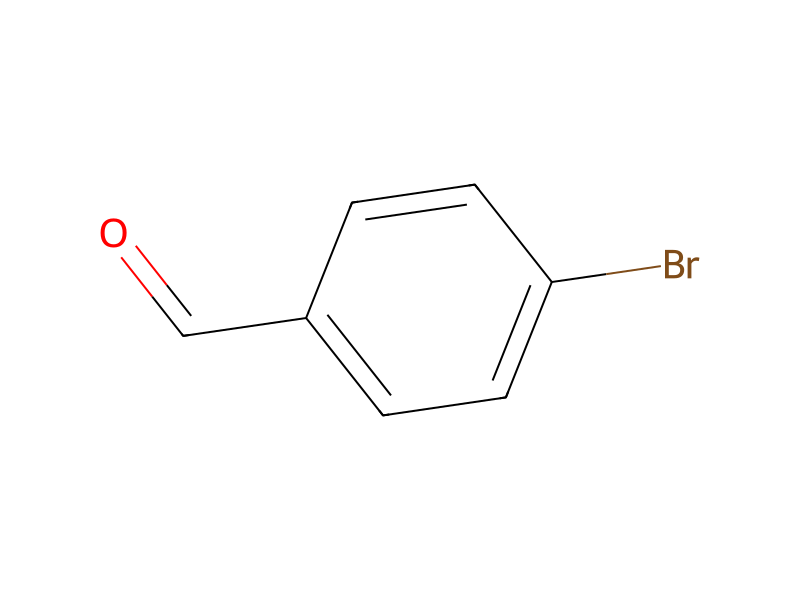
[CH:1]([O:4][C:5]1[CH:10]=[CH:9][C:8]([OH:11])=[CH:7][CH:6]=1)([CH3:3])[CH3:2].Br[C:13]1[CH:20]=[CH:19][C:16]([CH:17]=[O:18])=[CH:15][CH:14]=1.C([O-])([O-])=O.[K+].[K+].N1C=CC=CC=1>[O-2].[Cu+2].ClCCl>[CH:1]([O:4][C:5]1[CH:10]=[CH:9][C:8]([O:11][C:13]2[CH:20]=[CH:19][C:16]([CH:17]=[O:18])=[CH:15][CH:14]=2)=[CH:7][CH:6]=1)([CH3:3])[CH3:2]Participants
7





Procedure
To a mixture of Example 17A (1.50 g, 9.86 mmol), 4-bromobenzaldehyde (2.20 g, 11.9 mmol.), (K2CO3 (2.85 g, 20.6 mmol) and pyridine (50 mL) at 80° C. was added Cu(II) oxide (1.95 g, 24.5 mmol). After the addition, the mixture was refluxed vigorously for 20 hours. After cooling, dichloromethane was added and the mixture was filtered through Celite. The filtrate was concentrated to dryness. The residue was dissolved in ether, which was washed with 10% HCl (2×), 1N NaOH (2×), brine (1×), dried over MgSO4, and concentrated to dryness. The residue was purified on silica gel eluting with a hexane and ethyl acetate gradient to give the desired product as a white solid (1.42 g, 56%).
Workup
- additionAfter the addition
- temperaturethe mixture was refluxed vigorously for 20 hours
- temperatureAfter cooling
- filtrationthe mixture was filtered through Celite
- concentrationThe filtrate was concentrated to dryness
- dissolutionThe residue was dissolved in ether
- washwhich was washed with 10% HCl (2×), 1N NaOH (2×), brine (1×)
- dry with materialdried over MgSO4
- concentrationconcentrated to dryness
- customThe residue was purified on silica gel eluting with a hexane and ethyl acetate gradient
Sources & evidence
- ORD record
- ord-d9dd6c9633f04085bc54f055c08be427
- Source dataset
- uspto-grants-2014_06
- Patent number
- US08748627B2
Reaction notes
Loading…