Hydrochloric Acid → Biphenyl-2-ylcarbamic Acid Piperidin-4-yl Ester
Reaction equation

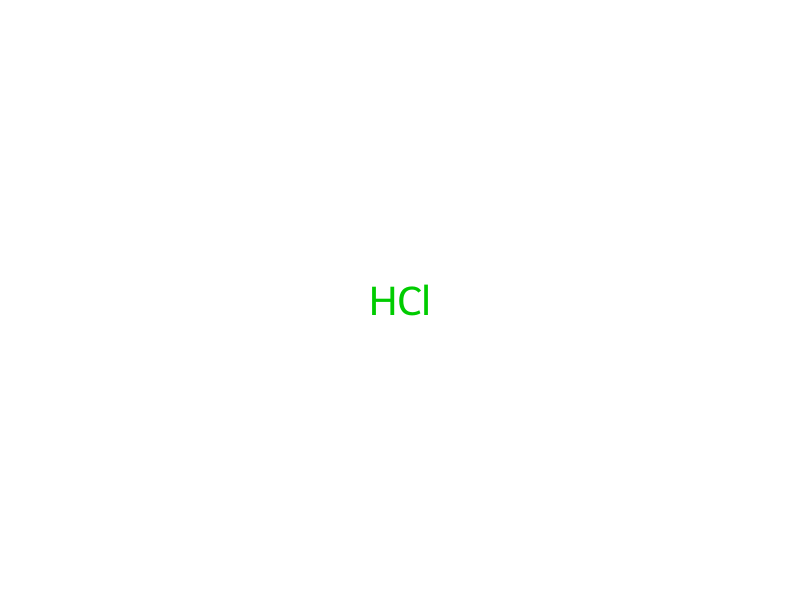
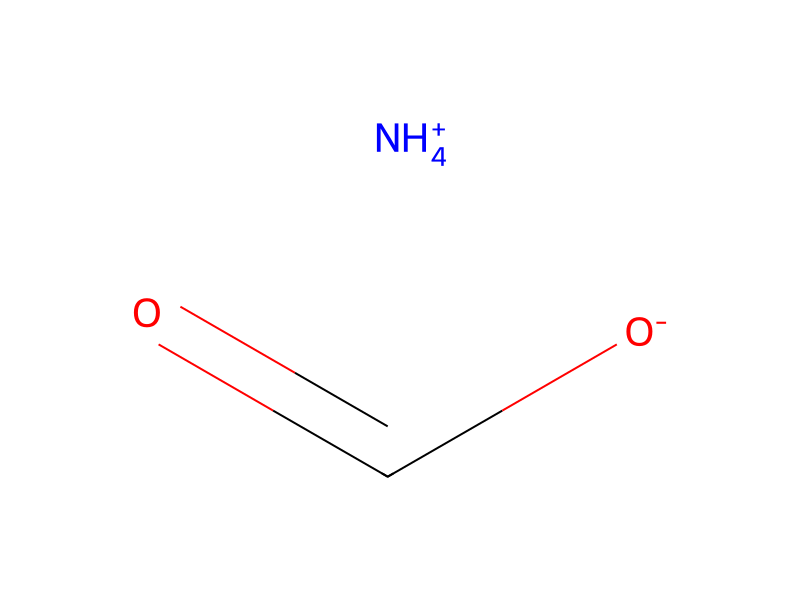
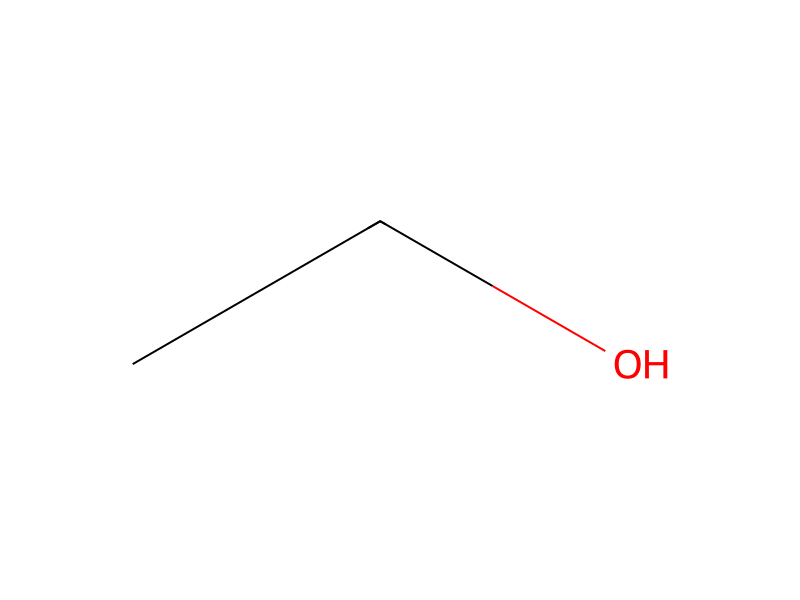
OC1CCN(CC2C=CC=CC=2)CC1.C([N:22]1[CH2:27][CH2:26][CH:25]([O:28][C:29](=[O:43])[NH:30][C:31]2[CH:36]=[CH:35][CH:34]=[CH:33][C:32]=2[C:37]2[CH:42]=[CH:41][CH:40]=[CH:39][CH:38]=2)[CH2:24][CH2:23]1)C1C=CC=CC=1.Cl.C([O-])=O.[NH4+]>C(O)C>[NH:22]1[CH2:23][CH2:24][CH:25]([O:28][C:29](=[O:43])[NH:30][C:31]2[CH:36]=[CH:35][CH:34]=[CH:33][C:32]=2[C:37]2[CH:42]=[CH:41][CH:40]=[CH:39][CH:38]=2)[CH2:26][CH2:27]1Participants



Conditions
- Temperature
- 50 °C
Procedure
Biphenyl-2-isocyanate (97.5 g, 521 mmol) and 4-hydroxy-1-benzylpiperidine (105 g, 549 mmol), both commercially-available from Aldrich, Milwaukee, Wis., were heated together at 70° C. for 12 h, during which time the formation of biphenyl-2-ylcarbamic acid 1-benzylpiperidin-4-yl ester was monitored by LCMS. The reaction mixture was then cooled to 50° C. and ethanol (1 L) was added, and then 6M hydrochloric acid (191 mL) was added slowly. The reaction mixture was then cooled to ambient temperature and ammonium formate (98.5 g, 1.56 mol) was added and nitrogen gas was bubbled through the solution vigorously for 20 min. Palladium (10 wt. % (dry basis) on activated carbon) (20 g) was then added. The reaction mixture was heated at 40° C. for 12 h and then filtered through a pad of Celite. The solvent was then removed under reduced pressure and 1M hydrochloric acid (40 mL) was added to the crude residue. Sodium hydroxide (10N) was then added to adjust the pH to 12. The aqueous layer was extracted with ethyl acetate (2×150 mL) and dried (magnesium sulfate), and then the solvent was removed under reduced pressure to give the title compound (155 g, 100%). HPLC (10-70) Rf=2.52; MS m/z: [M+H+] calc'd for C18H20N2O2 297.15. found 297.3.
Workup
- temperatureThe reaction mixture was then cooled to ambient temperature
- customnitrogen gas was bubbled through the solution vigorously for 20 min
- additionPalladium (10 wt. % (dry basis) on activated carbon) (20 g) was then added
- temperatureThe reaction mixture was heated at 40° C. for 12 h
- filtrationfiltered through a pad of Celite
- customThe solvent was then removed under reduced pressure and 1M hydrochloric acid (40 mL)
- additionwas added to the crude residue
- additionSodium hydroxide (10N) was then added
- extractionThe aqueous layer was extracted with ethyl acetate (2×150 mL)
- dry with materialdried (magnesium sulfate)
- customthe solvent was removed under reduced pressure
Sources & evidence
- ORD record
- ord-676a1886daa749f8b917fd81a9dffaac
- Source dataset
- uspto-grants-2014_06
- Patent number
- US08754223B2
Reaction notes
Loading…