Hydrochloric Acid → 2-Aza-2-benzyl-4-oximino-3-oxo-bicyclo[3,2,1]octane
Reaction equation

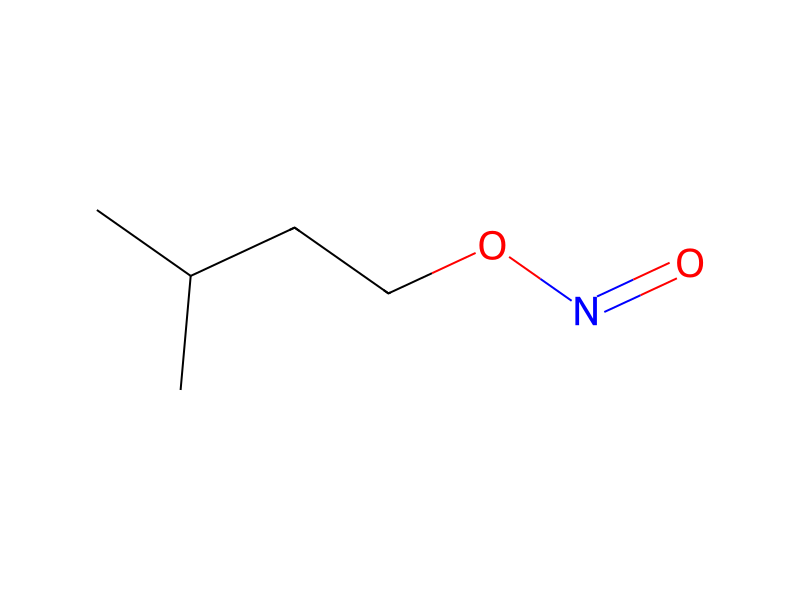
[CH2:1]([CH:8]1[C:14](=[O:15])[CH2:13][CH:12]2[CH2:16][CH:9]1[CH2:10][CH2:11]2)[C:2]1[CH:7]=[CH:6][CH:5]=[CH:4][N:3]=1.CC([O-])(C)C.[K+].C1COCC1.[N:28](OCCC(C)C)=[O:29].Cl>C1COCC1>[CH2:1]([CH:8]1[C:14](=[O:15])[C:13](=[N:28][OH:29])[CH:12]2[CH2:16][CH:9]1[CH2:10][CH2:11]2)[C:2]1[CH:7]=[CH:6][CH:5]=[CH:4][N:3]=1Participants
6




Procedure
To a solution of 2-aza-2-benzyl-3-oxobicyclo[3.2.1]octane in THF was added 2.5 eq. of 1M t-BuOK/THF (Aldrich) and the resulting mixture was stirred for 30 minutes. Isoamyl nitrite (1.5 eq.) was then added dropwise and the reaction mixture was stirred overnight. To the reaction mixture was added 3N HCl and this mixture was extracted with ethyl acetate and the organic extracts washed with water, dried, and concentrated under reduced pressure. The residue was triturated with ether/hexanes, the solvents decanted and the residue dried under reduced pressure to afford 2-aza-2-benzyl-4-oximino-3-oxobicyclo[3.2.1]octane as a tan liquid (41% yield). This procedure is further described in Y. Kim, Tetrahedron Lett. 30(21), 2833-2636 (1989).
Workup
- stirringthe reaction mixture was stirred overnight
- extractionthis mixture was extracted with ethyl acetate
- washthe organic extracts washed with water
- customdried
- concentrationconcentrated under reduced pressure
- customThe residue was triturated with ether/hexanes
- customthe solvents decanted
- customthe residue dried under reduced pressure
Sources & evidence
- ORD record
- ord-9a29c0e3faf34320a7c3d3431925280c
- Source dataset
- uspto-grants-2003_05
- Patent number
- US06559141B2
Reaction notes
Loading…