Ethylene Oxide → Triethanolamine
Reaction equation

N.C1OC1.C1OC1.C(CN)O.[NH:12]([CH2:16][CH2:17][OH:18])[CH2:13][CH2:14][OH:15].[N:19]([CH2:26][CH2:27][OH:28])([CH2:23][CH2:24][OH:25])[CH2:20][CH2:21][OH:22]>>[NH:12]([CH2:16][CH2:17][OH:18])[CH2:13][CH2:14][OH:15].[N:19]([CH2:26][CH2:27][OH:28])([CH2:23][CH2:24][OH:25])[CH2:20][CH2:21][OH:22]Participants



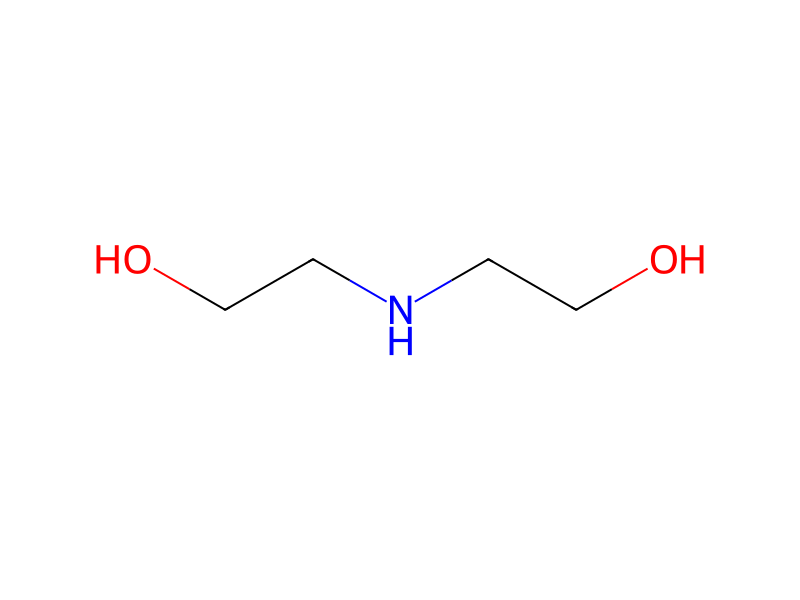
Conditions
- Temperature
- 150 °C
Procedure
The reaction was carried out by use of the apparatus shown in FIG. 5. A stainless steel tube having an inner diameter of 15 mm, a length of 400 mm, a heater wound thereon for compensating the heat radiation, and a heat-insulation was used as a reactor 501. Within the reactor 501, a protection tube where a thermocouple could be inserted to measure the temperature profile of a fixed catalytic layer, was installed. Into the reactor 501 was packed 50 cm3 of catalyst A, and the raw material (the molar ratio of ammonia/ethylene oxide: 8/1) heated to 60° C. through a pre-heater 502 was fed at 5 hr−1 (LHSV), to carry out the reaction. The reaction pressure was 10 MPa, and the reaction was in a gas-liquid mixing phase. Though the temperature increased up to 150° C. by the heat of reaction over the length of about 100 mm from the inlet at the initial stage, the temperature came to have a profile barely rising to nearly 150° C. after 200 hrs near the outlet of the catalytic layer. As a result, a reduction in catalytic activity was observed. The results obtained are as follows: the conversion of ethylene oxide was 100%; and the ratio of each component in the produced ethanolamines was: monoethanolamine/diethanolamine/triethanolamine=51/46/3. Diethanolamine was produced at a high selectivity while a small amount of triethanolamine was produced.
Workup
- customA stainless steel tube having
- customa heat-insulation was used as a reactor
- customthe reaction
- customThe reaction pressure
- additionmixing phase
- temperatureheat of reaction over the length of about 100 mm from the inlet at the initial stage
- waitbarely rising to nearly 150° C. after 200 hrs near the outlet of the catalytic layer
- customThe results obtained
Sources & evidence
- ORD record
- ord-fba3b2a4933e4f01950ea81e631c8130
- Source dataset
- uspto-grants-2003_05
- Patent number
- US06559342B1
Reaction notes
Loading…