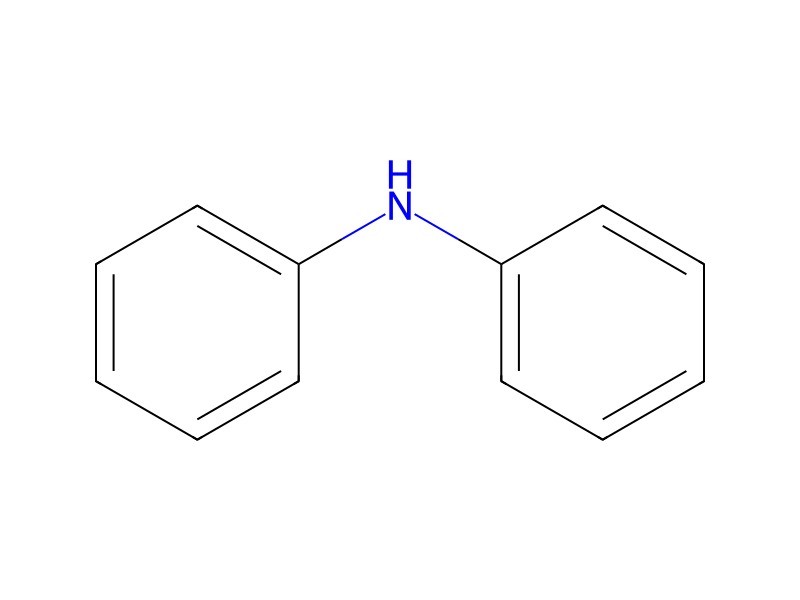
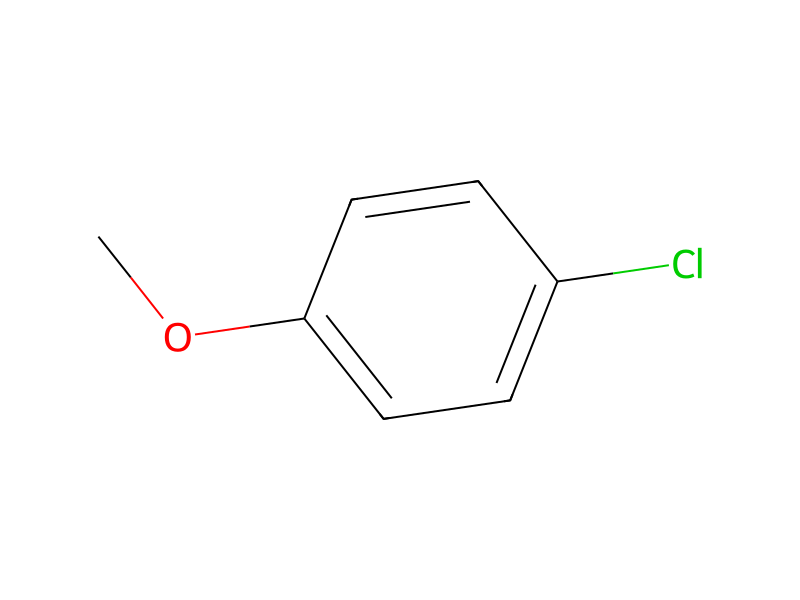
Diphenylamine → 4-Methoxytriphenylamine
Reaction equation

Cl[C:2]1[CH:7]=[CH:6][C:5]([O:8][CH3:9])=[CH:4][CH:3]=1.[C:10]1([NH:16][C:17]2[CH:22]=[CH:21][CH:20]=[CH:19][CH:18]=2)[CH:15]=[CH:14][CH:13]=[CH:12][CH:11]=1.CC(C)([O-])C.[Na+]>>[CH3:9][O:8][C:5]1[CH:6]=[CH:7][C:2]([N:16]([C:17]2[CH:18]=[CH:19][CH:20]=[CH:21][CH:22]=2)[C:10]2[CH:15]=[CH:14][CH:13]=[CH:12][CH:11]=2)=[CH:3][CH:4]=1Participants
4


Procedure
According to the general procedure A described above, 4-chloroanisole (130 mg, 0.92 mmol) reacted with diphenylamine (169 mg, 1.00 mmol) at 80° C. for 12 h using 1 mol % of Pd(dba)2/Ph5FcP(t-Bu)2 catalyst and sodium tert-butoxide to give the title compound (270 mg, 99%) as a solid: 1H-NMR (300 MHz, CDCl3): δ 7.30 (app.t, 4H, J=7.5 and 8.1 Hz), 7.17 (app.t, 6H, J=8.4 and 9.0 Hz), 7.04 (app.t, 2H, J=7.2 and 6.9 Hz), 6.94 (d, 2H, J=9.0 Hz), 3.88 (s, 3H). 13C{1H}-NMR (100 MHz, CDCl3): δ 156.11, 148.13, 140.74, 129.04, 127.26, 122.84, 121.78, 114.71, 55.44. GC/MS(EI): m/z 275 (M+).
Sources & evidence
- ORD record
- ord-7e33505ca2154d26873fcee3c2b0ad1c
- Source dataset
- uspto-grants-2003_05
- Patent number
- US06562989B2
Reaction notes
Loading…