Water → HCID 19850148, compound
Reaction equation

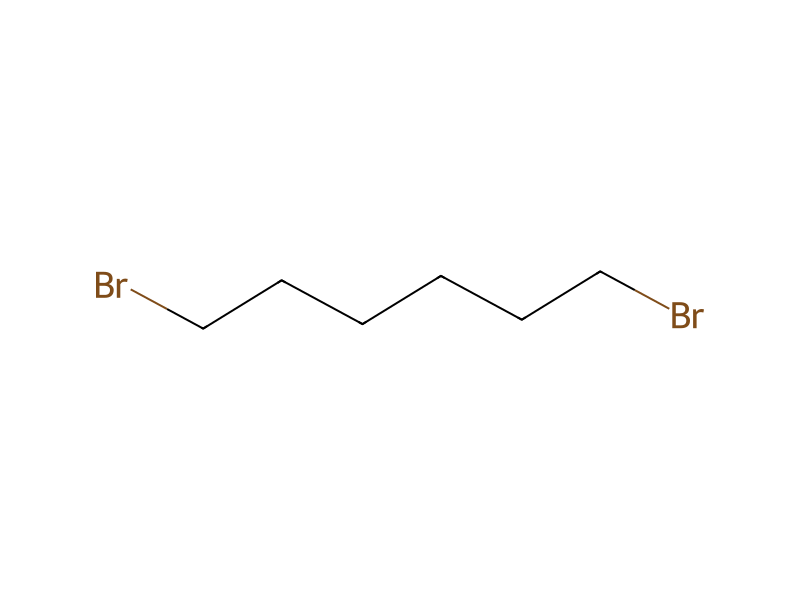
[F:1][C:2]([F:15])([F:14])[C:3]([NH:5][CH2:6][CH2:7][C:8]1[CH:13]=[CH:12][CH:11]=[CH:10][CH:9]=1)=[O:4].[H-].[Na+].[Br:18][CH2:19][CH2:20][CH2:21][CH2:22][CH2:23][CH2:24]Br.O>CN(C)C=O>[Br:18][CH2:19][CH2:20][CH2:21][CH2:22][CH2:23][CH2:24][N:5]([CH2:6][CH2:7][C:8]1[CH:13]=[CH:12][CH:11]=[CH:10][CH:9]=1)[C:3](=[O:4])[C:2]([F:14])([F:15])[F:1]Participants
Reactant 4



Product 1

Reagents, catalysts & solvents 1

Procedure
2,2,2-Trifluoro-N-(2-phenylethyl)acetamide (21.7 g., 0.1 mole) in dry dimethylformamide (100 ml) was added dropwise with stirring and under nitrogen to sodium hydride (2.4 g., 0.1 mole, ether washed) in dry dimethylformamide (150 ml). Stirring was continued until a clear solution was obtained and 1,6-dibromohexane (73.2 g., 0.3 moles) was added. The solution was heated at 60° for 3 hr then poured into water and extracted with ether. The extracts were washed well with water and dried and evaporated. Excess dibromohexane was recovered by distillation (b.p. 60°-70°/0.1 mmHg) and the residue was separated on a silica gel column using ether-light petroleum (1:2) as eluant. The major fraction was evaporated to give the title compound as a pale yellow oil (24 g). A sample was distilled to give a colourless viscous liquid, b.p. 146°-152°/0.05 mmHg, (with slight decomposition).
Workup
- customwas obtained
- temperatureThe solution was heated at 60° for 3 hr
- extractionextracted with ether
- washThe extracts were washed well with water
- customdried
- customevaporated
- distillationExcess dibromohexane was recovered by distillation (b.p. 60°-70°/0.1 mmHg)
- customthe residue was separated on a silica gel column
- customThe major fraction was evaporated
Sources & evidence
- ORD record
- ord-0a7d78fb33c0495e9a27946a9ea2829a
- Source dataset
- uspto-grants-1988_12
- Patent number
- US04791216
Reaction notes
Loading…