3-Bromopyridine → HCID 14373283, compound
Reaction equation

[C:1]([C:3]1[CH:4]=[C:5]2[C:10](=[CH:11][CH:12]=1)[NH:9][C:8](=[O:13])[CH2:7][CH2:6]2)#[CH:2].Br[C:15]1[CH:16]=[N:17][CH:18]=[CH:19][CH:20]=1>C1C=CC(P(C2C=CC=CC=2)C2C=CC=CC=2)=CC=1.C1C=CC(P(C2C=CC=CC=2)C2C=CC=CC=2)=CC=1.Cl[Pd]Cl>[N:17]1[CH:18]=[CH:19][CH:20]=[C:15]([C:2]#[C:1][C:3]2[CH:4]=[C:5]3[C:10](=[CH:11][CH:12]=2)[NH:9][C:8](=[O:13])[CH2:7][CH2:6]3)[CH:16]=1Participants
4
Reactant 2
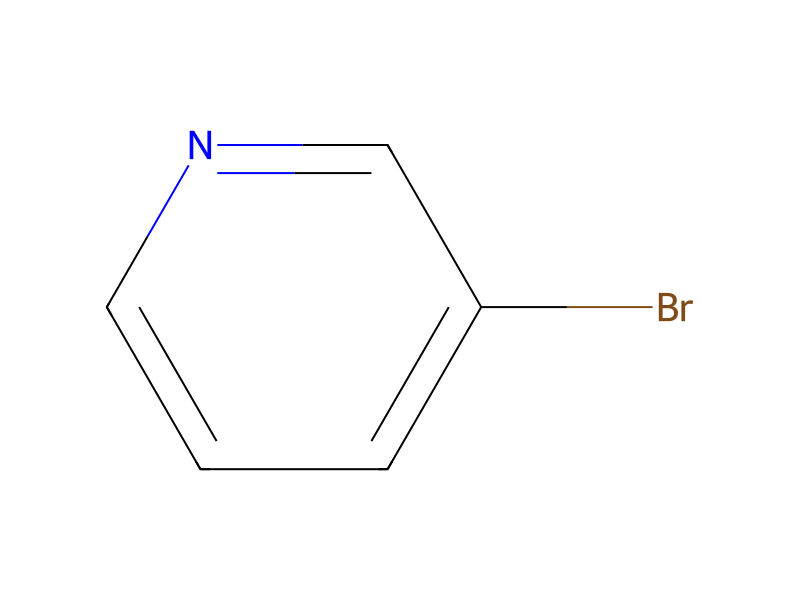

Product 1

Reagents, catalysts & solvents 1

Procedure
A mixture of 11.6 mg of cuprous iodide, 86 mg of bis (triphenylphosphine)palladium(II)dichloride, 1.0 g of 6-ethynyl-3,4-dihydrocarbostyril and 3-bromopyridine were reacted as shown in Example 9, and the product isolated in a similar fashion, giving 6-[2-(3-pyridyl)ethynyl]-3,4-dihydrocarbostyril, m.p. 195°-197° C.
Workup
- customwere reacted
- customthe product isolated in a similar fashion
Sources & evidence
- ORD record
- ord-1737355dbf564e0c984b894b66592f38
- Source dataset
- uspto-grants-1988_12
- Patent number
- US04792561
Reaction notes
Loading…