Pyridine → HCID 3616760, compound
Reaction equation

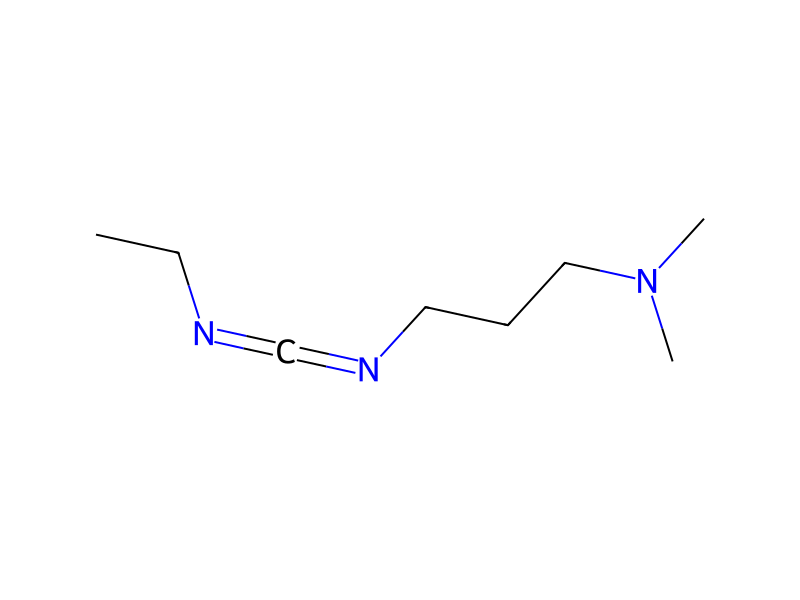
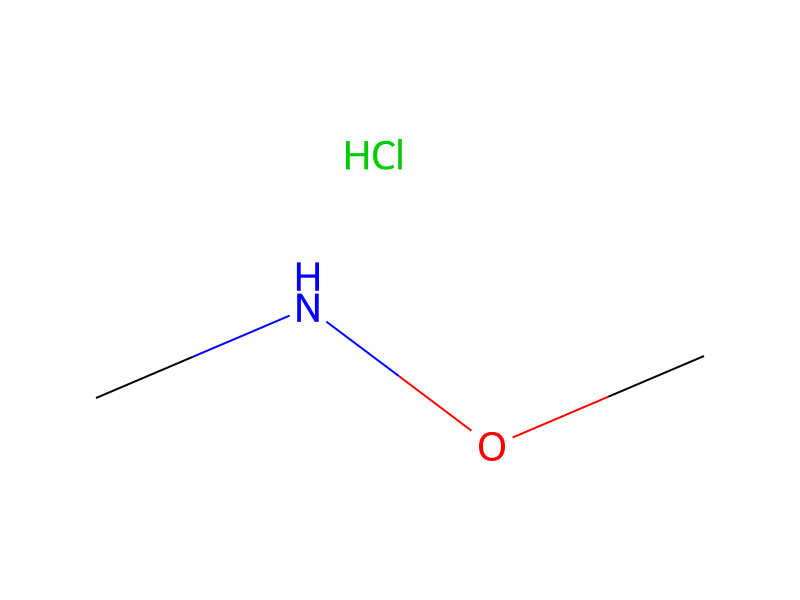
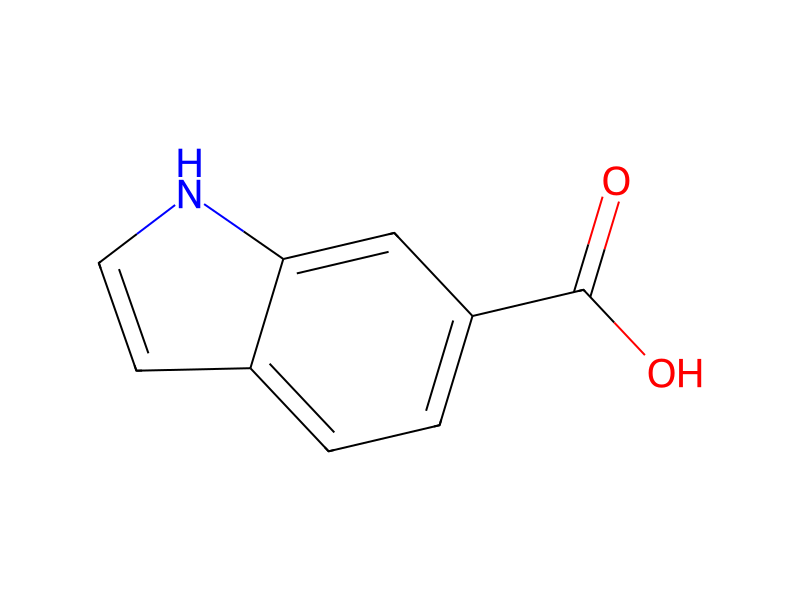
[NH:1]1[C:9]2[C:4](=[CH:5][CH:6]=[C:7]([C:10]([OH:12])=O)[CH:8]=2)[CH:3]=[CH:2]1.Cl.[CH3:14][NH:15][O:16][CH3:17].CN(C)CCCN=C=NCC.N1C=CC=CC=1>O1CCCC1>[CH3:17][O:16][N:15]([CH3:14])[C:10]([C:7]1[CH:8]=[C:9]2[C:4]([CH:3]=[CH:2][NH:1]2)=[CH:5][CH:6]=1)=[O:12]Participants
6



Procedure
In a round-bottomed flask, 5.0 g of indole-6-carboxylic acid, 3.3 g of N,O-dimethylhydroxylamine hydrochloride, 11.9 g of 1-(3-dimethylaminopropyl)-3-ethylcarbodiimide and 10 ml of pyridine are placed in 150 ml of tetrahydrofuran. The mixture is stirred at ambient temperature for 40 h. The mixture is concentrated, and the residue is taken up in 150 ml of ethyl acetate and 50 ml of water. The organic phase is washed with 50 ml of a 1N solution of sodium hydroxide and 50 ml of a saturated solution of sodium chloride, dried over magnesium sulphate and then concentrated under reduced pressure. 6.8 g of compound are obtained.
Workup
- concentrationThe mixture is concentrated
- washThe organic phase is washed with 50 ml of a 1N solution of sodium hydroxide and 50 ml of a saturated solution of sodium chloride
- dry with materialdried over magnesium sulphate
- concentrationconcentrated under reduced pressure
Sources & evidence
- ORD record
- ord-d6021ef64e2b49c0bc964dc7747babf1
- Source dataset
- uspto-grants-2012_01
- Patent number
- US08088765B2
Reaction notes
Loading…