Triethylamine → 5-bromo-2-chloro-N-(5-methyl-1H-pyrazol-3-yl)-4-Pyrimidinamine
Reaction equation

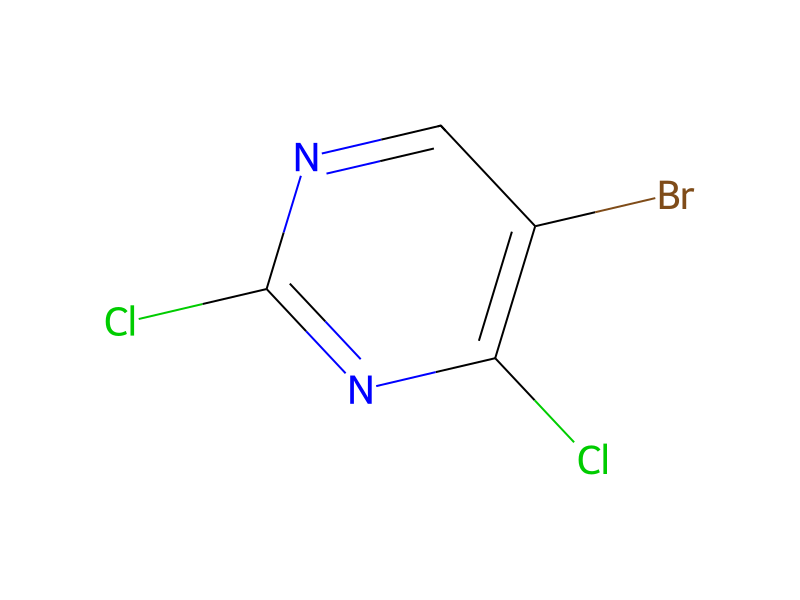
[Br:1][C:2]1[C:3](Cl)=[N:4][C:5]([Cl:8])=[N:6][CH:7]=1.[CH3:10][C:11]1[NH:15][N:14]=[C:13]([NH2:16])[CH:12]=1.C(N(CC)CC)C>CCO>[Br:1][C:2]1[C:3]([NH:16][C:13]2[CH:12]=[C:11]([CH3:10])[NH:15][N:14]=2)=[N:4][C:5]([Cl:8])=[N:6][CH:7]=1Participants
5




Procedure
To a solution of 5-bromo-2,4-dichloropyrimidine (1.29 g, 5.66 mmol) in EtOH (15 ml) at room temperature was added a solution of 5-methyl-1H-pyrazol-3-amine (549 mg, 5.66 mmol) in EtOH (3 ml) and triethylamine (628 mg, 6.22 mmol) and the reaction mixture was stirred at room temperature overnight. The suspension was filtered and washed with water and dried to give the desired product as a white solid (1.27 g, 78%). NMR (CDCl3) 2.24 (s, 3H), 6.24 (s, 1H), 8.41 (s, 1H), 9.29 (s, 1H), 12.32 (s, 1H).
Workup
- filtrationThe suspension was filtered
- washwashed with water
- customdried
Sources & evidence
- ORD record
- ord-e09809372bc849d8b68d28301c4a3ff6
- Source dataset
- uspto-grants-2012_01
- Patent number
- US08088784B2
Reaction notes
Loading…