Carbon tetrabromide → 4-Bromo-1-(bromomethyl)-2-methylbenzene
Reaction equation

[Br:1][C:2]1[CH:7]=[CH:6][C:5]([CH2:8]O)=[C:4]([CH3:10])[CH:3]=1.C(Br)(Br)(Br)[Br:12].C1C=CC(P(C2C=CC=CC=2)C2C=CC=CC=2)=CC=1.C1(P(=O)(C2C=CC=CC=2)C2C=CC=CC=2)C=CC=CC=1>C(Cl)Cl.CCCCCC.CCOC(C)=O>[Br:1][C:2]1[CH:7]=[CH:6][C:5]([CH2:8][Br:12])=[C:4]([CH3:10])[CH:3]=1Participants
Reactant 4



Product 1

Reagents, catalysts & solvents 2


Conditions
- Temperature
- 2.5 °C
Procedure
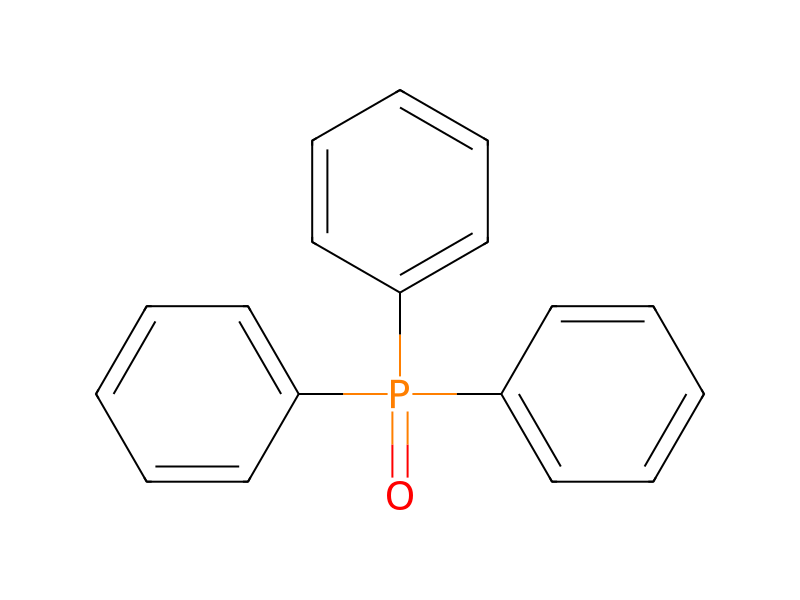
(4-Bromo-2-methylphenyl)methanol (10.4 g, 51.6 mmol) is dissolved in anhydrous CH2Cl2 (150 mL) and CBr4 (18.8 g, 56.8 mmol) added. The reaction mixture is cooled to 0-5° C. and PPh3 (14.9 g, 56.8 mmol) is added. The reaction mixture is stirred overnight then hexane/EtOAc (9:1) (250 mL) is added with vigorous stirring. The triphenylphosphine oxide that forms during the reaction is filtered off and the filtrates are concentrated in vacuo. The resulting oil is purified on a silica gel pad with hexane/EtOAc (8:2). The solvent are removed on a rotary evaporator and the bromoform is removed by vacuum distillation (15 mm Hg, bp: 40-50° C.) to provide the expected product 1-Bromo-4-(bromomethyl)-3-methylbenzene (13.23 g, 97%) as a yellow oil. 1H NMR (300 MHz, CHLOROFORM-D): δ 7.37-7.27 (2H, m), 7.17 (1H, d, J=8.1 Hz), 4.45 (2H, s), 2.39 (3H, s).
Workup
- filtrationis filtered off
- concentrationthe filtrates are concentrated in vacuo
- customThe resulting oil is purified on a silica gel pad with hexane/EtOAc (8:2)
- customThe solvent are removed on a rotary evaporator
- customthe bromoform is removed by vacuum distillation (15 mm Hg, bp: 40-50° C.)
Sources & evidence
- ORD record
- ord-af63366a49e647f7b1560c42d2fa307e
- Source dataset
- uspto-grants-2012_01
- Patent number
- US08093402B2
Reaction notes
Loading…