Ammonium Chloride → 4-Bromo-1-isopropoxy-2-vinylbenzene
Reaction equation

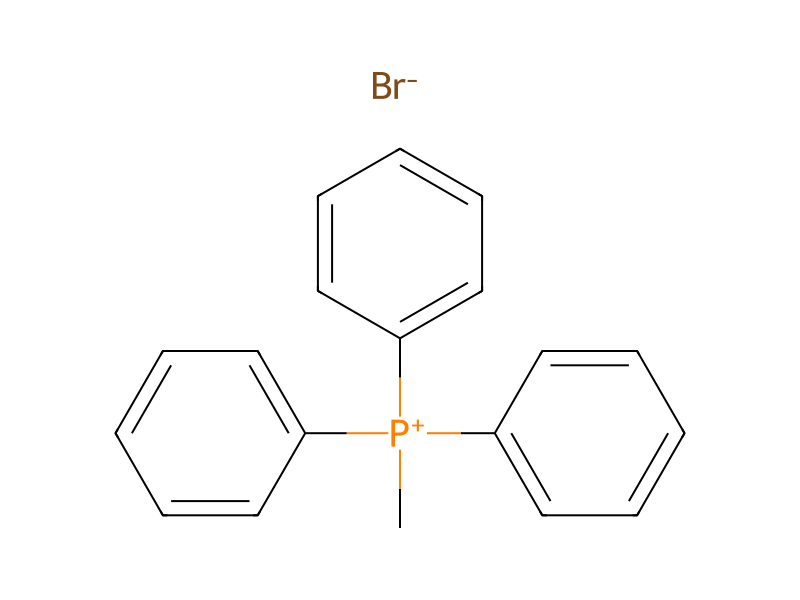
[CH2:1]([Li])CCC.[Br:6][C:7]1[CH:8]=[CH:9][C:10]([O:15][CH:16]([CH3:18])[CH3:17])=[C:11]([CH:14]=1)[CH:12]=O.[Cl-].[NH4+]>[Br-].C[P+](C1C=CC=CC=1)(C1C=CC=CC=1)C1C=CC=CC=1.C1COCC1.COC(C)(C)C.CCCCCC>[Br:6][C:7]1[CH:8]=[CH:9][C:10]([O:15][CH:16]([CH3:18])[CH3:17])=[C:11]([CH:12]=[CH2:1])[CH:14]=1Participants
Reactant 3



Product 1

Reagents, catalysts & solvents 3


Conditions
- Temperature
- -70 °C
Procedure
To a suspension of methyltriphenylphosphonium bromide (41.1 g, 115 mmol) in THF (1.2 L) cooled to −70° C., was added n-butyllithium (123 mmol, 2.5 M in hexanes). The mixture was stirred for a further 10 min, and then allowed to warm up to 0° C. and stir at this temperature for 10 min. The reaction mixture is then cooled again at −50° C., and 5-bromo-2-isopropoxybenzaldehyde (20.0 g, 82.2 mmol) in solution in THF (5 mL) was added. The mixture was stirred for 10 min, then allowed to warm up to room temperature. An ammonium chloride solution was added and the reaction mixture was diluted with a mixture methyl t-butylether/hexane, filtered through celite, and then dried over magnesium sulfate. The solvent was removed in vacuo to afford compound AY (18.9 g) as a pale yellow oil in 95% yield.
Workup
- temperatureto warm up to 0° C.
- stirringstir at this temperature for 10 min
- temperatureThe reaction mixture is then cooled again at −50° C.
- stirringThe mixture was stirred for 10 min
- temperatureto warm up to room temperature
- filtrationfiltered through celite
- dry with materialdried over magnesium sulfate
- customThe solvent was removed in vacuo
- customto afford compound AY (18.9 g) as a pale yellow oil in 95% yield
Sources & evidence
- ORD record
- ord-6acc623d9f0848d68c7d8795d896495e
- Source dataset
- uspto-grants-2012_01
- Patent number
- US08093379B2
Reaction notes
Loading…